
In one paragraph: Baby Botox is a lower-dose injection technique, typically 50–60% of a standard cosmetic dose, placed in more, smaller injection points. That softens lines while preserving natural expression. It is best for patients in their late 20s through early 40s who want subtle, “you look rested, not done” results. Trade-offs: shorter duration (about 2.5–3 months instead of 3–4), and a wrinkle pattern that softens rather than disappears. Same per-unit price as standard Botox, the cost is lower per visit because you receive fewer units.
What baby Botox actually means
The term “baby Botox” describes a technique, not a different product. The active medication is the same onabotulinumtoxinA used in any Botox treatment. What changes is the dose and the distribution: smaller amounts of neurotoxin placed in more injection points across the muscle, instead of larger boluses placed at fewer points.
The result is a partial relaxation rather than a full freeze. The muscle still moves, just less. Expression survives. Lines soften. Static creases that have not yet etched into the skin do not deepen further. For broader context on the category, see our guide to neurotoxins.
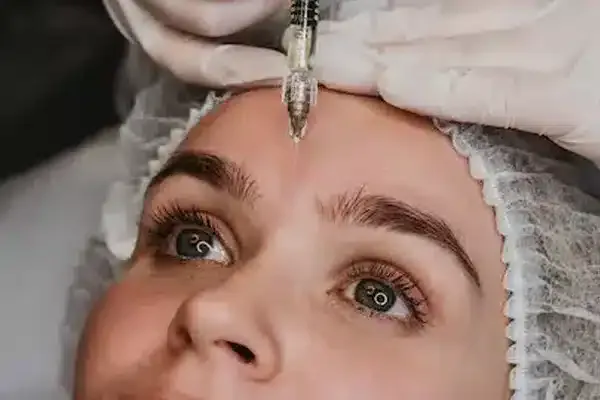
How is baby Botox different from regular Botox?
Same medication. Different placement strategy. The total syringe used per patient is smaller; the technique is more demanding because the injector is hitting more points with precise depth.
Why patients ask for it
The three motivations we hear most often:
- “I don’t want anyone to know.” Patients in their late 20s and early 30s who want their first treatment to be invisible to friends and family.
- “I need to be expressive on camera.” Newscasters, actors, attorneys in trial work, executives who present often, content creators. Frozen forehead reads poorly on video.
- “I tried regular Botox and it was too much.” A subset of patients are unusually neurotoxin-sensitive and look heavier than expected after a standard dose. Baby Botox is the recalibration.
It is also a natural extension of the preventative Botox in your 20s philosophy: small, early intervention to keep lines from etching, with the lowest possible visual signature.
Who is a good candidate?
- Patients in their late 20s through early 40s with fine dynamic lines and no deep static creases
- First-time Botox patients who are nervous about looking “frozen”
- People in public-facing roles (broadcast, performing arts, sales)
- Patients with a history of over-response to standard dosing
- Patients who want a predictable wear-off, subtle results fade subtly
Patients who are not great candidates:
- Deep, etched static lines that need a full dose plus skin treatments to soften, baby Botox will under-deliver
- Patients who specifically want a fully frozen, line-free upper face for events
- Heavy brow depressors who need anatomy-appropriate dosing to avoid a heavy result
How a typical baby Botox plan looks
Common upper-face plan for a 32-year-old first-timer:
- Glabella (the 11s): 10–14 units split across 5–7 points instead of the standard 3–5
- Forehead: 4–8 units split across 6–10 points
- Crow’s feet: 4–6 units per side, 3 points each
- Total: ~25–35 units (vs ~50–65 in a standard upper-face package)
The injector is biased toward more points, shallower placement, and smaller boluses. Concentration of the dilution may also be adjusted to limit spread. For a deeper dive into upper-face dosing, see our posts on forehead Botox and glabellar (11s) Botox.
How long does baby Botox last?
Shorter than standard Botox, by roughly a few weeks. Most patients see:
- Onset: days 3–5
- Peak effect: week 2
- Wear-off: starts at month 2–2.5
- Full return of movement: month 3
Standard Botox doses typically run 3–4 months. The shorter duration of baby Botox is the trade-off for lower dose. Some patients re-treat 4 times per year instead of 3.
For the underlying biology, our guide to Botox longevity explains why dose, muscle activity, and metabolism each influence wear-off.
How much does it cost?
Baby Botox is priced the same way as regular Botox, per unit. At $12–$18 per unit in Orange County, a typical 25–35 unit baby Botox session lands at $300–$630 per visit. Annual spend depends on how often you re-treat:
- 3 visits/year at $450 = $1,350
- 4 visits/year at $450 = $1,800
That is comparable to or slightly less than a standard Botox protocol. See our Botox cost in Orange County page for current ranges.
How to ask for baby Botox at your appointment
Walk in with a clear request and your injector will work with you. A useful script:
“I want a baby-Botox approach, soften, do not freeze. Preserve some movement in my forehead. I’d rather under-treat and add at the two-week visit than start with too much.”
Helpful follow-up questions:
- “How many units are you planning per area?”
- “Will I still be able to raise my eyebrows?”
- “What is the touch-up policy if I want a little more at week 2?”
The two-week follow-up matters more for baby Botox than for standard dosing. It is easier to add than subtract.
Side effects and trade-offs
- Same class side effects as any Botox: bruising, headache, asymmetric brow lift, mild eyelid heaviness (rare at lower doses)
- Less risk of a heavy or “frozen” appearance simply because total dose is lower
- Higher risk of under-treatment. You may want a touch-up at week 2
- Shorter duration, more frequent visits
If you do react oddly, the effect resolves faster, another upside of the lower dose. For aftercare specifics see our Botox aftercare guide.
Baby Botox vs preventative Botox vs micro-dosing, what is the difference?
- Baby Botox, technique: lower dose, more points, preserved expression
- Preventative Botox, strategy: starting Botox in your 20s before lines etch in. Often uses a baby-Botox dose.
- Micro-dosing (or “Botox sprinkles”), intradermal placement, even lower doses, used more for pore size, oil control, and very superficial lines than for line softening alone
The terms overlap. What matters is what you actually want: less movement (baby) vs prevention (preventative) vs skin-quality changes (micro-dosing).
What good baby Botox actually looks like at week 2
The marker of a well-dosed baby Botox treatment is not the absence of lines. It is the absence of the “treated” signal. At full expression, you should see:
- A mild crease in the forehead when you raise your eyebrows, less than baseline, but still present
- Glabellar 11s that visibly soften when you frown, but the muscle still moves slightly
- Some crow’s feet activity at a full smile, with a clear reduction in line depth at rest
- Symmetric brow position, no “Spock brow” lift on one side
- No heaviness, no eyelid descent, no fatigue look
If you read these markers and feel disappointed, baby Botox may not be the right technique for your goal. A heavier, more conventional dose, while still age-anatomy appropriate, may serve you better.
Combining baby Botox with skin treatments
Because baby Botox addresses muscle activity but not skin texture, it pairs well with:
- Daily medical-grade tretinoin or retinoid for collagen turnover
- Quarterly chemical peels or hydrafacials
- RF microneedling 1–2 times per year for skin thickness and pore quality
- Daily SPF 30+, without it, the most flawless injection result still ages
The combination is what produces “they look great and I cannot put my finger on why” results. Botox alone tends to handle the dynamic component; skin treatments handle the static component. Filler enters the conversation only when there is true volume loss, which baby Botox candidates often do not yet have.
Frequently asked questions
Will baby Botox prevent wrinkles?
It reduces the depth of dynamic lines, which slows the development of static creases. It does not stop aging from sun exposure, sleep position, or skin laxity, those still need sunscreen, retinoids, and lifestyle work.
Can men get baby Botox?
Yes. Male patients often request a subtle approach, soften the 11s, keep brow movement. Male muscle mass is higher, so “baby” for a man may still be 14–18 glabellar units.
How soon will I see results?
Onset is typically day 3–5; peak effect at week 2. Because the dose is smaller, some patients see slightly slower onset than they would with standard dosing.
Can I do baby Botox with fillers in the same visit?
Yes, though most clinicians prefer to space them by 1–2 weeks if both are being done for the first time, so you can attribute any unexpected response to the right treatment.
What happens when it wears off?
Movement returns gradually starting around month 2–2.5. There is no “rebound” that makes lines worse than baseline.
Is baby Botox cheaper than standard Botox?
Per visit, yes, you receive fewer units at the same per-unit price. Annual cost is similar because you may re-treat slightly more often.
Talk to a clinician at OC Weight Loss and Medspa
If you want Botox that looks like a great night of sleep instead of a treatment, baby Botox is the technique to ask for. We start conservatively, photograph at baseline, and offer a complimentary touch-up at the two-week mark so we can dial the result in. Read more on our Botox in Mission Viejo page or the broader neurotoxins guide.
Book a free consultation
Related treatments at our Mission Viejo clinic
Not sure which treatment fits? These are the related services our clinicians most often discuss at a consultation.
- Botox Injections in Orange County CA – Quick & Convenient, Discover Botox injections to smooth fine lines, reduce wrinkles, and achieve a youthful, refreshed look with safe, non-surgical treatments.
- Dysport in Orange County – Get Results in Days, Searching for the best Dysport near me?
- Daxxify Injections Near Orange County - No Downtime, Looking for Daxxify injections near me?
References
- Efficacy and Safety of Botulinum Toxin Type A for Treatment of Glabellar Lines: A Network Meta-Analysis of Randomized Controlled Trials — Aesthetic Plast Surg 2023, via PubMed
- Efficacy and Safety of Botulinum Toxin Type A in the Treatment of Glabellar Lines: A Meta-Analysis of Randomized, Placebo-Controlled, Double-Blind Trials — Plast Reconstr Surg 2015, via PubMed
- Efficacy and safety of Botulinum toxin A for improving esthetics in facial complex: A systematic review — Braz Dent J 2021, via PubMed