Glow peptide blend, explained properly
What is in it, how it is given, why it stings, and why the dosing charts you are finding online do not mean what they appear to. Written by the clinic that administers it, not by a supplier selling it.
Medically reviewed by Lindsay Short, NP-BC, Board-Certified Nurse Practitioner · last reviewed September 2026

What is in Glow, and what each part is supposed to do
Glow is not one compound. It is a blend of three, sold under a name a supplier chose rather than a name that describes it, which is the first reason so much of the information about it does not agree with itself.
GHK-Cu. A copper peptide, and the component with the most human data behind it, although almost all of that data is topical rather than injected. It is studied for collagen synthesis and wound repair, and it is the reason the blend is marketed for skin. It is also the reason it stings.
BPC-157. A synthetic fragment derived from a protein found in gastric juice, studied for tendon, ligament and gut healing. Almost entirely in animals. It is the component people are usually chasing when they take Glow for recovery from training.
TB-500. A synthetic form of a fragment of thymosin beta-4, studied for tissue repair and cell migration. Again, largely animal work.
Total strength is usually quoted as 50 mg or 70 mg. The split between the three is not standardized, so two vials with the same number on the label can contain different ratios. Nobody advertising a dose figure can tell you which one you have.
The three components, side by side
Laid out plainly, because the blend is marketed as one thing and it is three, each at a different stage of evidence and each studied mostly in a form that is not this one.
| What it is | Studied for | Evidence stage | |
|---|---|---|---|
| GHK-Cu | A copper peptide | Collagen synthesis, wound repair, skin quality | Most human data of the three, almost all topical rather than injected |
| BPC-157 | A synthetic gastric protein fragment | Tendon, ligament and gut healing | Largely animal studies |
| TB-500 | A synthetic fragment of thymosin beta-4 | Tissue repair and cell migration | Largely animal studies |
Two things the table makes obvious that the marketing does not. The component with the best evidence has it for a route of administration this product does not use, and the two components people are usually chasing for recovery are the two whose human data is thinnest. Neither of those makes the blend worthless. Both are things you should know before deciding it is worth your money.
Where it goes, and why the site matters more than people think
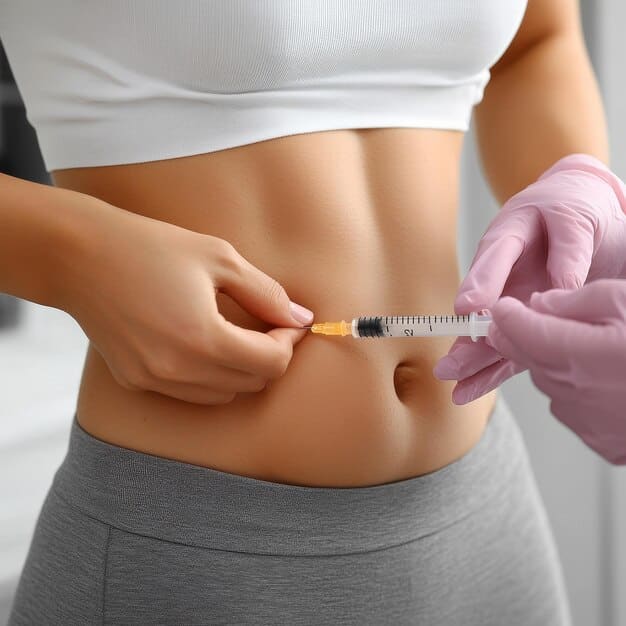
This is the most-searched question about Glow by a wide margin, and it has a short, genuine answer. Glow is given subcutaneously, into the layer of fat under the skin, not into muscle and not into a vein.
The usual sites
The abdomen, staying a couple of inches clear of the navel; the outer thigh; the back of the upper arm. These are chosen because the fat layer is reliable there and the tissue is forgiving.
Rotate, every time
Move a few centimeters from the last spot. Repeatedly injecting one area causes the tissue to thicken over weeks, which changes how the dose absorbs and makes the injection itself more uncomfortable. This is the single most common technique mistake.
Not the face
It gets suggested constantly online because the blend is marketed for skin. Facial tissue is thin, vascular and unforgiving, and a compounded blend of unverified concentration does not belong there.
Clean site, clean hands, new needle
Unglamorous and the part that actually prevents the problem worth preventing. A cellulitis from a reused needle is a far more likely outcome than any benefit the blend is being taken for.
The answer to “where” being straightforward is exactly why the answer to “how much” is not. They are usually asked in the same breath and they are not the same kind of question.
Why you will not find a dosing chart here
You will find plenty elsewhere. They are confidently formatted, they use units and milligrams, and several of them contradict each other. Here is what a chart would need in order to mean anything, and why this one cannot have both.
- An established dose
- Does not exist, no approved labeling for any of the three
- A verified concentration
- Not available for vials outside the approved supply chain
- A standard blend ratio
- Varies between suppliers at the same total strength
- What we publish instead
- What determines a protocol, and a consultation to set one
There is no established dose. A dose range comes from trials that establish it and a regulator that approves the labeling. None of GHK-Cu, BPC-157 or TB-500 has been through that as an injectable. What circulates instead are figures copied between forums, originally chosen by someone whose reasoning is not recorded.
And a chart in units is only meaningful if you know the concentration. “Twenty units daily” describes a volume on a syringe, not a quantity of drug. It converts to a milligram figure only if the vial holds the milligrams on the label and was reconstituted to the volume the chart assumed. For material bought outside the approved supply chain, neither is verified, purity and actual content are exactly what is not guaranteed. So the number is precise and unfounded at the same time, which is worse than no number, because it feels like knowledge.
What genuinely varies a protocol is bodyweight, what you are trying to change, how you tolerate the first weeks, and how long you intend to run it. Those are consultation questions, and we would rather answer them for you specifically than publish a figure for a stranger to inject.
Why it stings, and what is worth worrying about
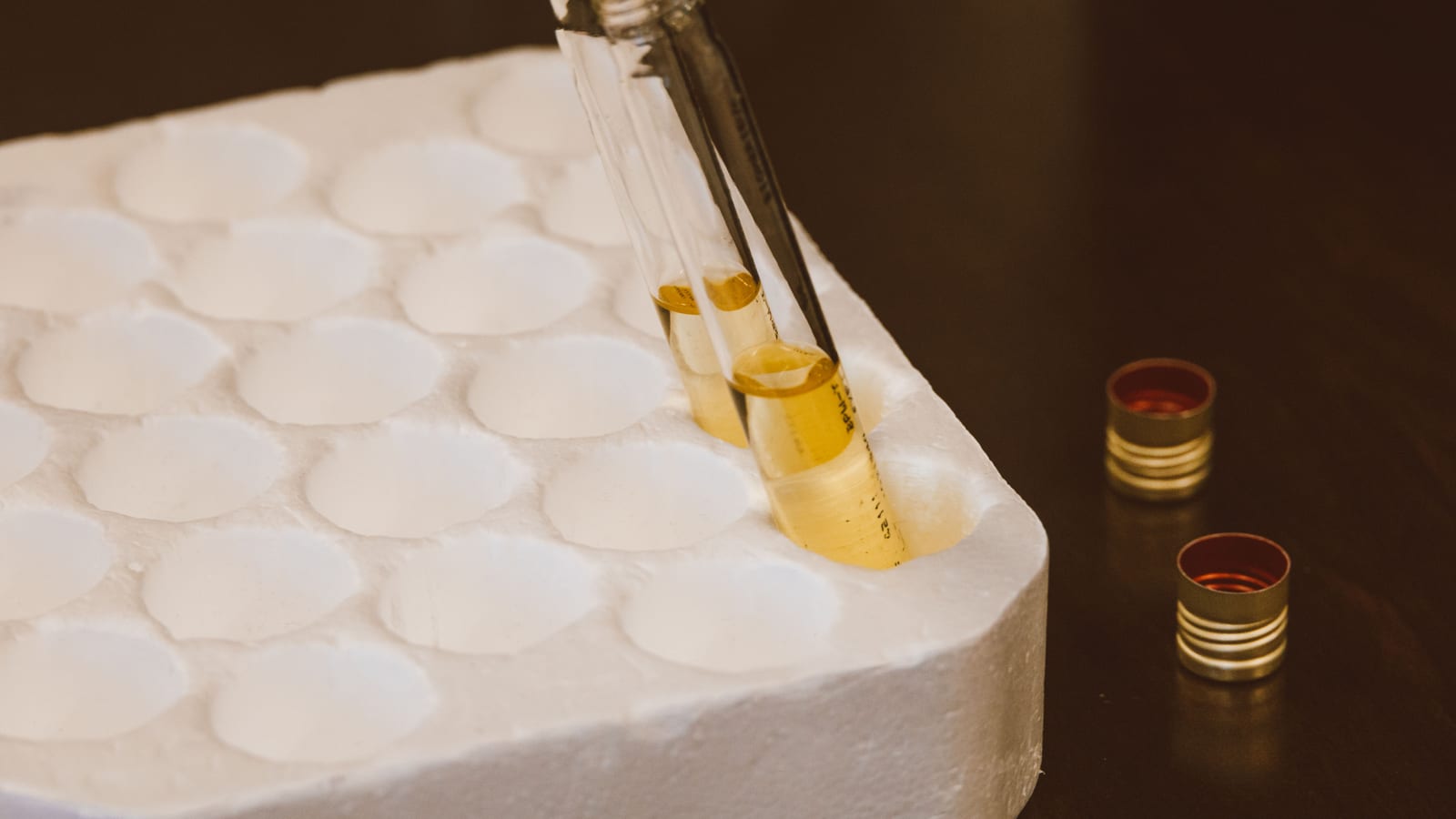
The sting is usually the GHK-Cu. Copper peptide solutions sit acidic relative to tissue, and that pH gap is what you feel. It normally passes within a minute or two, and a brief flush of warmth or pink at the site is ordinary.
Expected: a short sting, transient redness, occasional itching, a small bruise if you catch a vessel. Nothing that needs action.
Not expected, and worth a call: pain that builds over hours rather than fading, redness that spreads outward, swelling that feels hot, a hard lump that does not resolve within a few days, or any fever. That pattern is irritation or infection, not the usual sting, and it is the reason this blend is not a thing to work out alone from a forum thread.
Because these are not approved drugs, there is no established side-effect profile from controlled study, only what patients and clinicians report. Anyone presenting a tidy list of side effects for Glow is presenting it with more confidence than the evidence carries.
How long before anything changes
Worth setting out properly rather than leaving in an FAQ, because the order things change in is the only reliable way to judge whether this is doing anything for you.
Weeks one to three, sleep and recovery
The first thing most people report, and the most useful one to watch, because you notice it without needing a test. If nothing has shifted here by the end of the first month, that is real information rather than impatience.
Weeks four to eight, how training feels
Recovery between sessions is the second thing described consistently. It is also the one most easily confounded, since anyone starting this is often training and eating differently at the same time.
Months two to three, skin
Texture and tone move slowest, because that follows collagen turnover rather than anything faster. Judging skin at week three is judging the wrong window.
Month three, the honest review
The point at which we look at it together and decide whether to continue. If the answer is that nothing has changed, the right response is to stop rather than to add a second peptide to explain the first.
Before and after photographs circulating for this blend are uncontrolled and frequently confound it with weight loss, better sleep or a new skincare routine begun at the same time. Your own photograph at the first visit is worth more than any of them.
What the evidence supports, separated honestly
This blend is marketed with a confidence the research does not have. The three components are not at the same stage of evidence, and it is worth knowing which is which before you spend anything.
Reasonably supported, in the wrong form
GHK-Cu has real human data for skin, but overwhelmingly as a topical. Applying that evidence to an injected blend is an extrapolation, and it is presented as though it were not.
Promising, almost entirely preclinical
BPC-157 and TB-500 both have genuinely interesting animal data for tendon, ligament and soft-tissue repair. Animal data is where it currently ends. That is not nothing, and it is not the same as evidence it works in you.
Reported consistently, not formally measured
Better sleep and faster recovery between training sessions are what patients most often describe. Consistent enough to take seriously, uncontrolled enough that expectation effects cannot be separated out.
Not supported at all
Weight loss, reversing aging, and any before-and-after photograph presented as a result of this blend alone. Those images are uncontrolled and usually overlap with weight change, better sleep or a new skincare routine begun at the same time.
The regulatory position, stated plainly
This is the part most pages selling Glow leave out, so it is worth being direct. None of GHK-Cu, BPC-157 or TB-500 is an FDA-approved drug. All three sit in Category 2 of the FDA’s 503A bulk drug substances list, the category for substances that raise significant safety concerns, which means compounding pharmacies are not permitted to compound them.
The practical consequence: injectable Glow does not come from the approved supply chain. Vials sold online are typically labeled “for research use only, not for human consumption”, which is the supplier declining the responsibility rather than a formality. Nothing about the purity, sterility or actual content of that material is guaranteed to you.
None of that is an argument that it does nothing. It is the reason the decision belongs with a licensed clinician who has taken a history, rather than with a chart, and the reason we will sometimes tell a patient this is not a good use of their money.
Who this is for, and who it is not
It suits people already training consistently who want recovery and sleep to keep up with the load, and people who have read about it, understand it is not an approved medication, and want it administered by a clinician rather than sourced online and injected at a kitchen table.
It does not suit anyone expecting it to do the work instead of the training. Nothing here builds tissue you have not asked your body to build, and a blend taken alongside no other change is the version that reliably disappoints.
We would decline during pregnancy or breastfeeding, and with an active cancer diagnosis or a history of one, because tissue repair signaling and cell proliferation are related closely enough that the caution is real rather than precautionary. Anything affecting your immune system or a bleeding disorder is a conversation before it is a prescription.
And if what you actually want is weight loss, this is the wrong page. None of the three components has an appetite or metabolic mechanism, and medical weight loss is the honest answer. We would rather send you there than take the booking.
How we handle it in Mission Viejo
- Glow peptide injection
- NAD+ injection
- Ipamorelin injection
- Multi-injection packages
Consultation is free, and it is a real conversation about whether this is worth doing rather than a booking step. If the honest answer is that your money is better spent elsewhere, we will say so.
Glow is quoted per injection, administered in clinic. The consultation covers whether it is worth doing for what you are actually trying to change.
- Quoted in writing before anything starts. You hear the full figure at your consultation, not after treatment and not on the day.
- The consultation is free, with no obligation to book and no charge if you decide against it.
- We do not bill insurance. No prior authorization, no coverage denial part-way through, and no treatment decision made by a plan rather than by your clinician.
- Cherry and CareCredit financing are available, and membership pricing is lower than standard rates.
Every injection is given by Lindsay Short, NP-BC, a board-certified nurse practitioner, in the clinic. You see the same clinician each visit, which is what makes it possible to tell whether a protocol is doing anything, and to stop it when it is not.
If you came here for a dosing figure to use with a vial you already own, we would rather you brought it in. We are not going to pretend a chart makes that safe, and a short conversation about what you actually have is worth more than a number from a forum.
We are on Marguerite Parkway in Mission Viejo, Monday to Friday, and we see patients from Lake Forest, Laguna Niguel, Aliso Viejo, Rancho Santa Margarita and Ladera Ranch. Peptides are one part of what we do, peptide therapy covers the rest, and medical weight loss is the right page if weight rather than recovery is the actual goal.
Book a free consultationAnswers before you book
Where do you inject Glow peptide?
Subcutaneously, into the fat layer rather than muscle. In a clinic the usual sites are the abdomen a couple of inches away from the navel, the outer thigh, or the back of the upper arm. The site is rotated each time rather than reused, because repeated injections into one spot cause the tissue to harden over weeks and absorb less predictably. Glow is not given intramuscularly and it is not injected into the face, despite how often that is suggested online.
How often is it injected?
Protocols in use run anywhere from daily to a few times a week, over a defined course rather than indefinitely. The honest answer is that no schedule here is established by trials, because none of the three components has an approved label to establish one. That is why we set a frequency at a consultation against what you are actually trying to change, and review it, rather than publishing a number for anyone to copy.
Why is there no reliable Glow dosage chart?
Because a chart needs two things this category does not have. First, an established dose, none of GHK-Cu, BPC-157 or TB-500 is FDA-approved, so there is no approved labeling and no agreed therapeutic range. Second, a known concentration. A chart in units only means something if the vial holds the milligrams the label claims and dissolved to the volume assumed, and vials bought from research-chemical sites are not verified for either. The charts circulating are copied between forums and rest on assumptions their readers cannot check.
Why does Glow sting or burn when injected?
Most often the GHK-Cu. Copper peptide solutions are acidic relative to tissue, and that pH difference is felt as a sting that settles within a minute or two. A brief flush of warmth or redness at the site is common. What is not expected is pain that builds over hours, spreading redness, swelling with heat, or a hard lump that does not resolve, those suggest irritation or infection rather than the usual sting, and they need to be looked at.
What is actually in Glow?
Three compounds, most commonly GHK-Cu, BPC-157 and TB-500. Blends are sold at several total strengths, 50 mg and 70 mg are the ones asked about most, and the split between the three is not standardized between suppliers. Two vials both labeled "Glow 70" can contain materially different ratios, which is one reason a dose figure does not transfer from one person's protocol to another's.
Is Glow peptide FDA approved?
No. None of the three components is an FDA-approved drug, and all three sit in Category 2 of the FDA's 503A bulk drug substances list, the category for substances raising significant safety concerns, which compounding pharmacies may not use. Anything sold as injectable Glow is therefore outside the approved supply chain. That is a fact worth knowing before you decide, and any clinic that does not tell you is leaving out the most important part.
How long before I see anything?
Sleep and how you recover from training are the first things people report shifting, usually inside the first two to three weeks. Skin changes are slower and subtler, texture and tone over roughly two to three months, since that follows collagen turnover rather than anything faster. Before-and-after photographs circulating for this blend are uncontrolled and often confound it with weight loss, better sleep or a new skincare routine started at the same time.
Is there a best time of day to inject it?
There is no evidence establishing one, and this is asked far more often than the answer justifies. Consistency matters more than timing: the same time each day is easier to sustain and makes it possible to tell whether anything is actually changing. Some people prefer evening because the sting is easier to ignore before sleep.
Does Glow help with weight loss?
No, and it is not a weight loss treatment. None of the three components has an appetite or metabolic mechanism of the kind GLP-1 medications work through. If weight is the goal, that is a different conversation, our medical weight loss program is built around medication, body composition measurement and monitoring, and we would rather point you there than sell you this.
Can it be combined with NAD+ or a GLP-1?
People do combine them, and it is the wrong instinct if you want to know what is working. Starting two or three things together means a change tells you nothing about which produced it, and a reaction tells you nothing about which caused it. We add one thing at a time with a defined window to judge it, which usually ends up cheaper as well, because things that are not earning their place get stopped.
Ask before you inject, not after
A free consultation covers whether this is worth doing for what you are actually trying to change, and whether something with better evidence would serve you better. We will tell you if the answer is no.