Agnes RF
Insulated needles that release energy only at the tip, so depth and position are both chosen. It treats one defined thing at a time, including under-eye pockets that no other device here can reach.
Medically reviewed by Lindsay Short, NP-BC, Board-Certified Nurse Practitioner · last reviewed September 2026
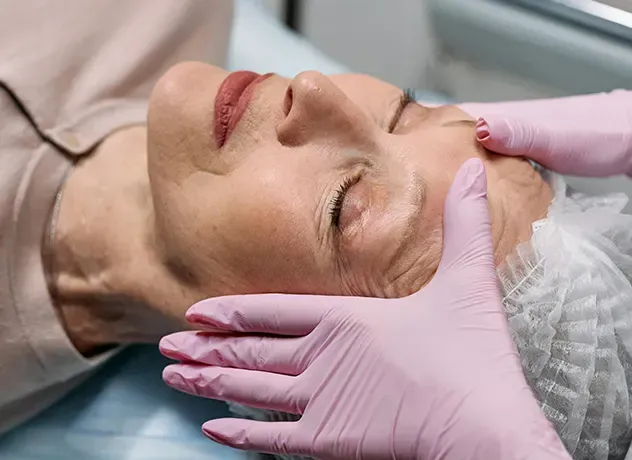
The insulated needle, and why it changes what is possible
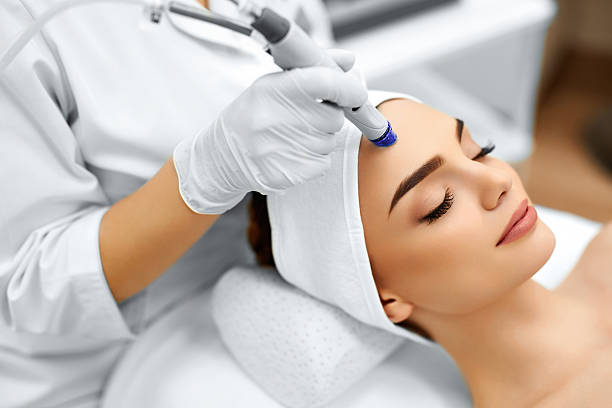
Radiofrequency tightens skin by heating tissue. The limitation of every device that applies it from the surface is that the energy passes through everything above the thing you actually want to treat.
Agnes inserts a needle that is insulated along its shaft. Only the uninsulated tip releases energy. That means the depth is selected and the surrounding tissue, including the skin above, is spared.
The consequence is a treatment that works on structures rather than areas. A single fat pad, an individual oil gland, one segment of a jawline. It is slower and more deliberate than any device that sweeps across a region, and it reaches things they cannot.
It also makes the operator matter more than the machine. Placement is mapped against photographs before anything is inserted.
Under the eyes, which is the real reason we have it
The fat pads that create permanent under-eye puffiness sit behind the orbital septum. No topical reaches them, no filler removes them, and no external energy device treats them. Until recently the only answer was surgery.
- What it treats
- Herniated under-eye fat pads causing puffiness
- What it is not for
- Dark circles from pigment, or hollowing
- Sessions
- Usually one, occasionally two
- Recovery
- Swelling for several days, and it is visible
Being precise about candidacy matters more here than anywhere else on the site. Puffiness from fat pads responds. Darkness that is pigment does not. A hollow rather than a bulge is a filler question and treating it with Agnes would make it worse. We assess which you have before agreeing to treat, and we decline this one more often than any other application.
Agnes RF or RF microneedling
| Agnes RF | RF microneedling | |
|---|---|---|
| Treats | One defined structure at a time | An area, broadly |
| Best for | Under-eye pockets, small fat pads, oil glands | Texture, pores, fine lines, mild laxity |
| Session length | 90 to 120 minutes | Under an hour |
| Sessions needed | One to two | Usually three |
| Downtime | Three to five days, can be pronounced | One to two days |
They are not competitors and plenty of people have both. The rule we use: if you can point at one specific thing, Agnes. If what bothers you is how your skin looks generally, RF microneedling does more for less and with an easier recovery.
What we treat with it
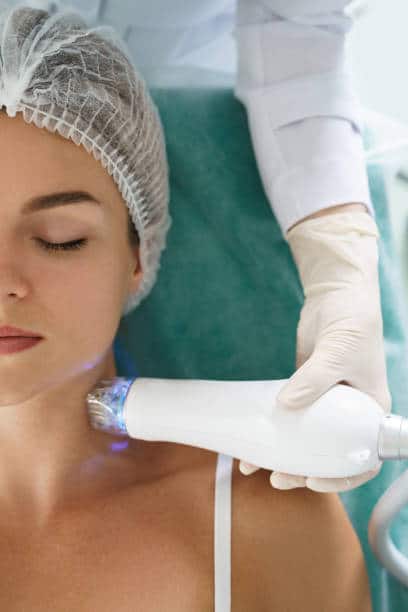
Small fat pockets
A double chin too small or too defined for an applicator to grip. Treated directly rather than through the skin.
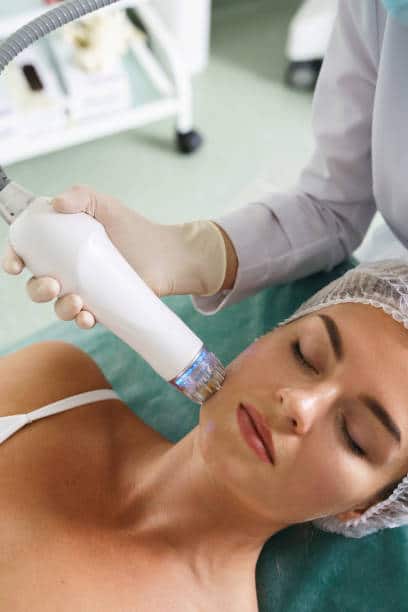
Face and jawline contouring
Definition along a jaw that has softened. It sharpens what is there rather than lifting what has descended.
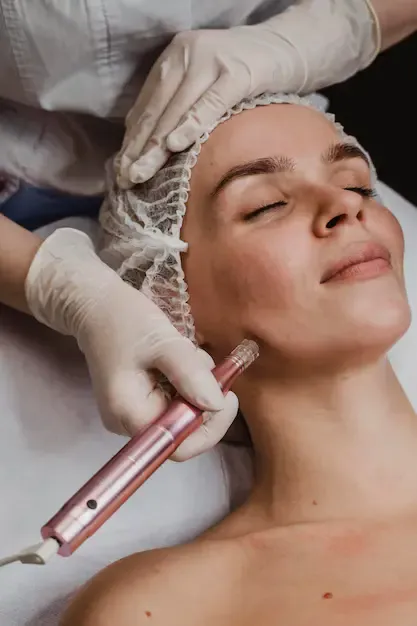
Active acne
Destroying individual oil glands, which is permanent for the glands treated and unlike anything topical.
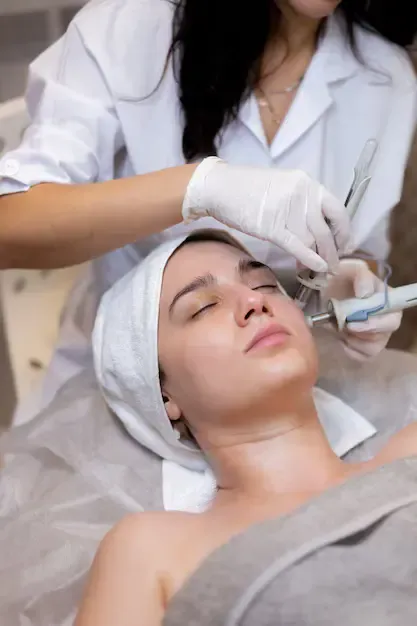
RF microneedling
The broader treatment for texture, pores and mild laxity, when the concern is general rather than specific.
Answers before you book
What makes Agnes RF different from other radiofrequency?
The needles are insulated along their length, so energy is released only at the exposed tip. Depth and position are both chosen rather than approximated, which means a single fat pocket or oil gland can be treated while the skin above and the tissue around it are left alone. Every other RF device here treats an area; this one treats a point.
What can it treat that other devices cannot?
Under-eye fat pockets, most notably. The pads that create a permanent puffiness beneath the eye sit in a place no external device reaches and where surgery has traditionally been the only option. Agnes can reduce them without an incision, and it is the main reason a practice carries this device at all.
Is it the same as RF microneedling?
Same energy, opposite philosophy. RF microneedling passes across an area to improve texture and general tightening, and it is the workhorse for skin quality. Agnes places energy into specific targets. If your concern is the overall look of your skin, microneedling is the answer. If it is one defined thing, Agnes is.
How long does a session take?
Ninety minutes to two hours depending on the area, and most of that is numbing and careful mapping rather than treatment. This is a slow, deliberate treatment by design, and a practitioner rushing it is doing the wrong thing.
How many sessions?
One to two for most targets, with a second considered at twelve weeks rather than booked upfront. That is unusually few for an aesthetic treatment and it follows from treating the structure directly rather than working across it.
What is the recovery?
Swelling for three to five days, and under the eyes it can be pronounced enough that you would not want to be seen at work. Bruising is common. Plan around it properly rather than treating the week of an event.
Is it safe on deeper skin tones?
Radiofrequency heats tissue directly rather than being absorbed by pigment, which removes the main mechanism behind pigmentation problems after light-based treatments. That makes it one of the safer energy options for richer complexions. Sun protection afterwards still matters.
Who should not have it?
Anyone with an active skin infection in the area, and it is not appropriate during pregnancy. A pacemaker or implanted electronic device needs a conversation first, as with any radiofrequency treatment. Realistic expectation matters too: if what you have is significant laxity, this is not a substitute for surgery and we will say so.
Precision is only worth paying for on the right target
A free consultation establishes whether what bothers you is a defined structure Agnes can treat, or a general concern that RF microneedling handles better and more cheaply.