
Quick summary: Sermorelin is a growth-hormone-releasing hormone (GHRH) analog that prompts the pituitary to release its own growth hormone in the natural pulsatile pattern. Because the largest GH pulse of the day happens during slow-wave (deep) sleep, a bedtime subcutaneous injection of sermorelin is timed to amplify that pulse, patients commonly report deeper, more continuous sleep within 4 to 8 weeks. Sermorelin is not a sleeping pill and not a shortcut. It is a peptide adjunct we use in selected midlife patients alongside sleep hygiene, weight management, and hormone evaluation. Typical protocol is 200 to 500 mcg subQ nightly, 5 nights per week, with re-evaluation at 12 weeks. It is not used in patients with active malignancy or uncontrolled comorbidities.
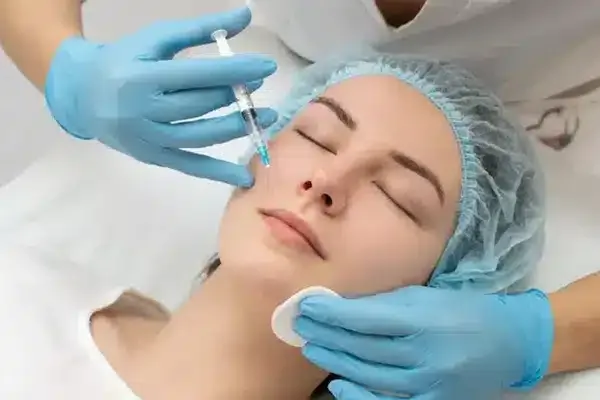
Most of the sleep complaints we hear from patients in their late 40s and 50s share a pattern: they fall asleep fine, then surface at 2 or 3 a.m. and feel like the deep portion of the night never happened. That subjective experience tracks a real physiologic change, and growth hormone is part of the story. For a fuller view of where peptides sit in our clinic, see the peptide therapy guide.
What is sermorelin?
Sermorelin is a synthetic 29-amino-acid peptide that mimics the active portion of endogenous growth-hormone-releasing hormone (GHRH). It binds the GHRH receptor on the anterior pituitary, which then releases growth hormone (GH) into the bloodstream. Unlike exogenous recombinant human growth hormone (rhGH), sermorelin works by amplifying the body’s own GH output, so the pulsatile rhythm is preserved and negative feedback loops still function.
The FDA originally approved sermorelin (Geref) for diagnostic and pediatric short-stature use; that branded product was withdrawn from the U.S. market in 2008, and sermorelin is now used in adults primarily as a compounded peptide prescribed by physicians for indications including age-related GH decline, sleep architecture, and recovery. It is not an FDA-approved adult anti-aging or sleep drug, and we describe it as exactly that to our patients.
How does growth hormone connect to sleep?
This is the link that makes sermorelin biologically interesting for sleep rather than just for recovery or body composition.
- Healthy adults release roughly 60 to 70 percent of their 24-hour GH in pulses during the first slow-wave sleep (SWS) cycle of the night, typically within the first 90 minutes after sleep onset.
- Slow-wave sleep declines progressively with age. By the late 50s, SWS may be reduced to a fraction of what it was at 25.
- That SWS decline is paralleled by a fall in nocturnal GH pulse amplitude and 24-hour integrated GH output, a phenomenon some sleep researchers call “somatopause.”
- The relationship is bidirectional. SWS drives GH release, and adequate GH signaling appears to support SWS consolidation. Studies of GHRH administration before sleep have shown increased SWS duration and reduced wake-after-sleep-onset in healthy older adults (Van Cauter et al., JAMA 2000).
That research base is what makes sermorelin a plausible, not guaranteed, sleep adjunct. The evidence in 2026 is suggestive, not definitive. We are explicit about that.
Why a bedtime injection?
Sermorelin has a short half-life, roughly 10 to 20 minutes in circulation. The intent is not to maintain a steady blood level but to deliver a peak right before the natural nighttime GH pulse, so the pituitary’s release is amplified rather than replaced.
The practical protocol we use:
- Timing: 15 to 30 minutes before bed, on an empty stomach (food, especially carbohydrate, blunts the GH response).
- Route: Subcutaneous injection in the abdomen or upper thigh, 28- to 31-gauge insulin syringe.
- Dose: Typically 200 to 500 mcg per night. Patients usually start at the lower end.
- Frequency: 5 nights per week, with 2 nights off to preserve receptor sensitivity.
- Duration: 12-week cycle, then re-evaluate. Some patients continue with breaks; others taper off once sleep architecture stabilizes.
An evening meal high in fat or carbohydrate within 90 minutes of the injection will reduce the GH pulse, so we coach patients on meal timing as part of the protocol.
Who is a candidate for sermorelin?
The right candidate is a midlife adult with documented sleep fragmentation, normal-to-low age-adjusted IGF-1, and no contraindications. The wrong candidate is anyone hoping a peptide will fix sleep problems caused by something else.
- Reasonable candidates: Adults 40 to 70 with subjective sleep fragmentation, particularly difficulty maintaining sleep in the second half of the night; falling IGF-1 with age but no diagnosed GH-deficiency disorder; metabolic concerns alongside sleep (often overlapping with our peptide therapy program patient base).
- Not appropriate: Active or recent malignancy (within 5 years), uncontrolled diabetes, severe cardiovascular or hepatic disease, pregnancy or breastfeeding, untreated obstructive sleep apnea (treat the OSA first, sermorelin is not a substitute), or known hypersensitivity to GHRH analogs.
- Caution: Patients on thyroid replacement or systemic corticosteroids. Both can interact with the GH axis and the dose timing may need adjustment.
Before prescribing, we order a baseline panel: IGF-1, a comprehensive metabolic panel, hemoglobin A1c, fasting insulin, lipid panel, and a sleep questionnaire. Patients with witnessed apnea, loud snoring, or excessive daytime sleepiness get a home sleep study referral first.
What does the research show?
The peer-reviewed literature on GHRH and sleep is older than the consumer interest in sermorelin, but it is real.
- GHRH infusion in healthy young men increased SWS duration and decreased nocturnal cortisol (Steiger et al., American Journal of Physiology 1992).
- Aging-related declines in GH and SWS appear coupled, and GHRH administration partially restores both in older adults (Van Cauter et al., JAMA 2000).
- Long-term sermorelin-specific sleep outcome studies are limited; most data extrapolate from GHRH research or pediatric GH-deficiency cohorts.
The honest summary: the physiology is well established, but large randomized trials of sermorelin specifically as a sleep intervention in healthy older adults are not yet available. Patient-reported outcomes in our clinic are consistent with the GHRH literature, deeper sleep, fewer 2 a.m. wake-ups, but we cannot promise that result, and we say so.
What benefits should you expect?
- Weeks 1 to 4: Most patients notice nothing or a subtle change in sleep continuity. Some report mild local injection-site reaction. Adherence matters.
- Weeks 4 to 8: Sleep diaries often show reduced wake-after-sleep-onset and fewer 2 to 4 a.m. awakenings. Morning energy improves in patients who already addressed caffeine timing.
- Weeks 8 to 12: Body-composition shifts may begin (modest lean-mass support, minor visceral-fat reduction) if the rest of the program, strength training, protein adequate, normal sleep duration, is in place.
- Months 3 to 6: Some patients describe improved recovery from exercise, fewer minor injuries, and better skin texture. None of this is FDA-approved as a claim; it reflects what we have observed and what the surrogate IGF-1 marker tracks.
What sermorelin will not do: it will not restore a 25-year-old’s GH curve, it will not replace sleep hygiene, and it will not solve obstructive sleep apnea or restless legs syndrome. Patients who try to use it as a workaround for those conditions will be disappointed.
What are the side effects?
- Common: Mild injection-site redness or pruritus, flushing, transient headache in the first week.
- Uncommon: Fluid retention with mild peripheral edema, transient joint achiness, vivid dreams in the first 2 weeks.
- Rare but important: Glucose dysregulation (we check A1c at baseline and at 12 weeks), worsening of carpal tunnel symptoms if pre-existing.
- Stop and call us: Persistent headache, swelling, vision change, or any new mass.
Sermorelin amplifies the body’s own GH release rather than introducing exogenous GH, so the supraphysiologic side-effect profile of rhGH (acromegaly-like changes, marked edema, carpal tunnel) is rare at properly dosed sermorelin. That safety advantage is part of why we prefer it to rhGH in non-deficient adults.
How does sermorelin compare to ipamorelin?
Both peptides increase endogenous GH release, but they hit different receptors.
For deeper-sleep goals specifically, sermorelin has the cleaner mechanistic rationale. For body-composition-led goals, ipamorelin (often combined with CJC-1295) is the more common protocol. See our side-by-side ipamorelin vs sermorelin breakdown for the full comparison.
How much does sermorelin cost?
- Initial peptide consultation + labs: $200 to $400, depending on whether IGF-1 is bundled.
- Sermorelin compounded vial (1 month supply at typical dose): $180 to $320 from a reputable 503A compounding pharmacy.
- Supplies (syringes, alcohol pads, sharps container): $15 to $25 a month.
- Follow-up labs at week 12: $80 to $180.
- Total first 3 months: typically $700 to $1,400.
We do not offer sermorelin without lab work and clinician oversight, and we will not refill a peptide indefinitely without re-evaluation. The IGF-1 trend over time is part of how we confirm the protocol is working physiologically, not just subjectively.
How do you start?
- Sleep history and screen. If apnea or restless legs is likely, that is the first appointment elsewhere.
- Baseline labs. IGF-1, CMP, A1c, fasting insulin, lipid panel.
- Risk review. Cancer history, family history, current medications, pregnancy status.
- Prescription and pharmacy. We use one of two 503A compounding pharmacies with documented quality control.
- Injection training. 15-minute teach-back in clinic.
- Twelve-week re-check. Symptoms, sleep diary, IGF-1, A1c.
Frequently asked questions
Is sermorelin legal?
Yes, when prescribed by a licensed physician and compounded by a state-licensed 503A pharmacy. It is not on the FDA’s approved-drug list for adult use, which is a different issue from legality. We do not source peptides from research-chemical or gray-market vendors.
Will sermorelin make me feel “high” or restless?
It should not. If anything, the most common subjective effect is a slightly heavier feeling shortly after the bedtime dose. Patients who report agitation are usually dosing too high or too early in the evening, we re-titrate.
Can I take sermorelin if I have a cancer history?
If the cancer is active or treated within 5 years, no. Sermorelin raises GH and IGF-1, and IGF-1 is a growth factor for many tumor types. We require oncologist clearance for any patient with a remote cancer history before considering this peptide.
How is sermorelin different from melatonin?
Melatonin shifts circadian timing. It helps you fall asleep at a planned hour. Sermorelin acts on sleep architecture, specifically the deep-sleep portion of the night. They address different problems. Some patients use a low-dose melatonin for timing and sermorelin for depth, but neither replaces the other.
How long should I stay on it?
Our default cycle is 12 weeks, with re-evaluation. Some patients continue with periodic breaks of several weeks; others taper off once sleep stabilizes and other interventions (strength training, weight loss, treatment of apnea) hold the gains. We do not view this as a permanent prescription.
Does sermorelin help with weight loss?
Indirectly. Better sleep supports weight regulation, and modestly higher GH signaling can support lean-mass maintenance during a calorie deficit. But sermorelin is not a weight-loss drug, and it does not produce the same body-composition effect as a GLP-1 medication. If weight is the primary goal, that conversation is different.
Can I stack sermorelin with HRT or testosterone?
Often yes, many of our peptide patients are also on hormone replacement. The combination has to be coordinated and the labs interpreted together, particularly IGF-1 alongside estradiol and testosterone changes.
Talk to a clinician at OC Weight Loss and Medspa
If your sleep has fragmented in the last few years and the usual fixes have not landed, sermorelin may be worth a structured trial under supervision. Start with a peptide-therapy consultation and we will work out the labs and the risk picture. See our peptide therapy program for the home page and the peptide therapy in Mission Viejo page for local logistics.
OC Weight Loss and Medspa24002 Via Fabricante #201, Mission Viejo, CA 92691+1 949-416-0950Mon–Fri 9 a.m.–5 p.m. | Sat 9 a.m.–1 p.m. | Sun closed
Book a free consultation
Related treatments at our Mission Viejo clinic
Not sure which treatment fits? These are the related services our clinicians most often discuss at a consultation.
- Peptide Therapy in Orange County, Clinician-supervised peptide therapy in Mission Viejo: Ipamorelin, NAD+, GLOW Blend, BPC-157.
- Ipamorelin Peptide for Fat Loss and Muscle Growth, Discover Ipamorelin peptide to support fat loss, boost growth hormone, and improve recovery with safe, effective anti-aging benefits today.
- NAD for Weight Loss Boost Energy and Burn Fat Fast, Discover NAD for weight loss to boost metabolism, increase energy, and support fat burning with advanced, effective wellness treatments.
References
- Pharmacological management of obesity: an endocrine Society clinical practice guideline — J Clin Endocrinol Metab 2015, via PubMed
- Testosterone Therapy in Men With Hypogonadism: An Endocrine Society Clinical Practice Guideline — J Clin Endocrinol Metab 2018, via PubMed