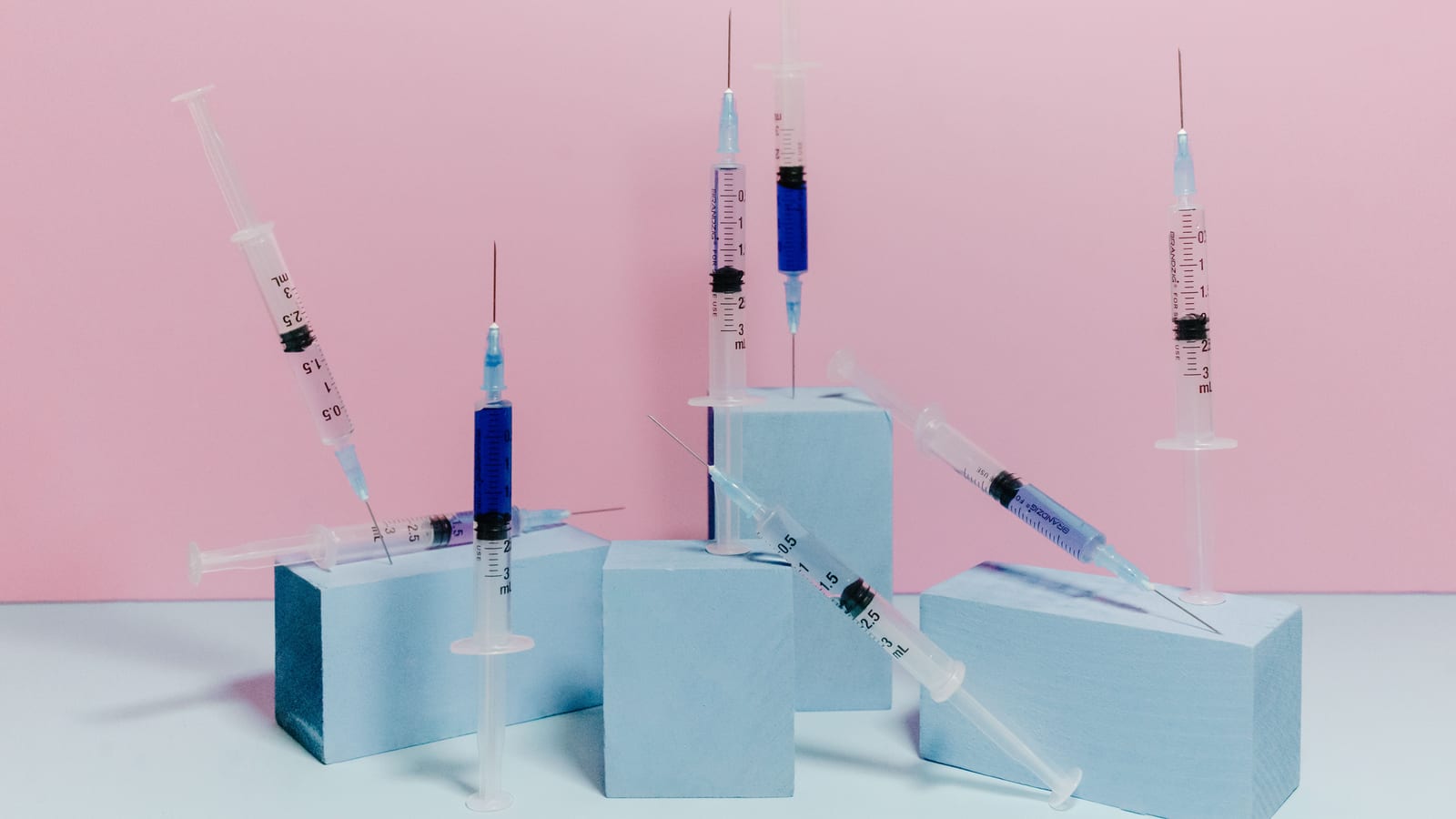
The short version: Dysport and Daxxify are both FDA-approved botulinum toxin type A neurotoxins, but they trade off in opposite directions. Dysport kicks in fast. Most patients see softening at 2 to 3 days, and lasts roughly 3 to 4 months. Daxxify takes longer to set up (5 to 7 days, sometimes longer) but the median duration in pivotal trials was about 6 months, with some patients holding effect at 9 months. Choose Dysport when you want quick onset and a lower per-treatment price; choose Daxxify when you want fewer appointments per year and don’t mind paying a premium.
What are Dysport and Daxxify?
Both products are purified preparations of botulinum toxin type A (BoNT-A), the same neuromodulator class as Botox and Xeomin. They work by blocking the release of acetylcholine at the neuromuscular junction, which temporarily relaxes the small muscles that produce expression lines on the forehead, between the brows, and around the eyes. What makes the two drugs different is the protein architecture around the active neurotoxin and, in the case of Daxxify, a peptide stabilizer that appears to extend duration.
Dysport (abobotulinumtoxinA) was approved by the FDA in 2009 for the temporary improvement of moderate-to-severe glabellar lines in adults under 65. It uses a smaller protein complex than Botox, and clinicians often describe it as having a slightly broader diffusion field, useful for treating wider areas like the forehead in one pass, but something an injector has to plan around when treating tight zones such as the crow’s feet.
Daxxify (daxibotulinumtoxinA-lanm) was approved by the FDA in September 2022, also for moderate-to-severe glabellar lines. It is the first long-acting neuromodulator to enter the U.S. cosmetic market and uses a proprietary peptide excipient (RTP004) instead of human serum albumin to stabilize the toxin. The manufacturer attributes the extended duration to that peptide chemistry. For a broader overview of how these products fit alongside Botox and Xeomin, see our neurotoxins guide.
Dysport vs Daxxify at a glance
| Factor | Dysport | Daxxify |
|---|---|---|
| Onset | Fast — most patients see softening at 2 to 3 days | Slower — 5 to 7 days, sometimes longer |
| How long it lasts | Roughly 3 to 4 months | Median about 6 months in pivotal trials; some held effect at 9 months |
| Treatments per year | 3 to 4 treatments per year | 2 treatments per year |
| Cost | $4 to $7 per unit; a 50-unit glabellar treatment costs $200 to $350 | $8 to $10 per unit; a 20-unit glabellar treatment costs $160 to $200 |
| Best suited to | Quick onset and a lower per-treatment price | Fewer appointments per year, if you don't mind paying a premium |
The table below summarizes the differences clinicians and patients actually decide between. Numbers reflect the FDA-approved prescribing information and the pivotal SAKURA program for Daxxify; individual results vary.
How fast does each one work?
Onset is where Dysport has a real, repeatable advantage. In the registration trials, a meaningful share of patients reported smoother glabellar lines as early as 24 hours after injection, and most saw clear softening by day 2 to 3. That speed is one reason injectors often recommend Dysport when a patient has an event, wedding, photoshoot, milestone birthday, within a week.
Daxxify is slower out of the gate. In the SAKURA-1 and SAKURA-2 phase 3 trials, the median time to onset was about 1 to 2 days for early softening but full effect typically settled between days 5 and 14. If you’ve used Botox or Dysport and find the first week underwhelming with Daxxify, that’s normal. Most patients who don’t see results at day 3 will see them by day 10.
How long does each one last?
This is where Daxxify pulls ahead. The pivotal trials published in the Journal of the American Academy of Dermatology reported a median duration of effect of about 6 months for glabellar lines, with a meaningful subset of patients still showing improvement at 9 months (Carruthers et al., JAAD 2022). The published SAKURA results are the basis for the “up to 6 months” claim in Daxxify’s labeling.
Dysport’s duration in the same anatomical area is shorter, typically 3 to 4 months, occasionally pushing to 5 months in patients with smaller muscle mass or lower metabolic clearance. The FDA-approved prescribing information for Dysport lists median duration around 4 months in the glabellar region (Dysport prescribing information, FDA).
One nuance: published durations are population medians. Patients who exercise heavily, who are on the lower end of body weight, or who have very expressive musculature may metabolize either product faster. If you’ve found that Botox at 12 weeks already feels gone, Daxxify won’t necessarily give you the full 6 months, but it usually buys an extra cycle or two each year. For context on how this varies, our guide to how long Botox lasts covers the patient-side factors in more depth.
How do the units compare?
Units are not interchangeable between brands. The FDA prescribing information is explicit about this, and clinicians who switch products mid-cycle have to redo dosing math. The general approximations injectors use:
- Botox to Dysport: 1 Botox unit ≈ 2.5 to 3 Dysport units. A typical glabellar dose of 20 Botox units would be ~50 to 60 Dysport units.
- Botox to Daxxify: Roughly 1:1 in clinical practice. A 20 Botox unit glabellar treatment translates to about 20 Daxxify units.
- Dysport to Daxxify: Approximately 2.5 to 3 Dysport units = 1 Daxxify unit. A 60-unit Dysport dose lines up to about 20 Daxxify units.
These ratios are conventions, not exact biological equivalences. Treat them as planning tools, not a guarantee that two products will produce identical results at the converted dose.
What does each one cost?
Pricing varies by region and provider, but the per-unit ranges in Orange County in 2026 sit roughly here:
- Dysport: $4 to $7 per unit. A 50-unit glabellar treatment costs $200 to $350.
- Daxxify: $8 to $10 per unit. A 20-unit glabellar treatment costs $160 to $200.
Per-treatment, the costs look similar, but the math changes when you annualize. Dysport at 3 to 4 months means 3 to 4 treatments per year. Daxxify at 6 months means 2 treatments per year. The cost-per-month tilts in Daxxify’s favor for patients who maintain treatment continuously, especially after the first year.
Who should choose Dysport?
Dysport tends to be the better fit when:
- You’re new to neurotoxins and want a lower-stakes first treatment. A 3- to 4-month duration means you can reassess sooner if you don’t like the look.
- You have an event in the next 5 to 10 days and need visible smoothing fast.
- You’re treating a wider area like the full forehead and your injector wants the slightly broader diffusion field.
- Your annual budget runs tighter and you prefer paying in smaller, more frequent installments.
- You’ve responded well to Botox in the past and want a similar effect with faster onset.
Who should choose Daxxify?
Daxxify tends to be the better fit when:
- You’re a long-term neurotoxin user tired of feeling the wear-off at month 3.
- You travel often or have a schedule that makes quarterly touch-ups inconvenient.
- You’ve had allergic-type reactions to human serum albumin in other products (Daxxify is albumin-free).
- You don’t mind paying more per treatment in exchange for half the number of appointments per year.
- You’re willing to wait the longer onset window, events in the next 2 weeks are not your priority.
What does the research show?
The SAKURA-1 and SAKURA-2 phase 3 trials enrolled over 600 adults with moderate-to-severe glabellar lines and were the basis for Daxxify’s FDA approval. Both trials hit their primary endpoints, with the majority of patients showing at least a 2-point improvement on the glabellar line severity scale at week 4. The median duration of meaningful effect was 24 weeks (about 6 months) (Carruthers et al., JAAD 2022).
Dysport’s evidence base is older and broader. A 2017 meta-analysis in Dermatologic Surgery pooled data across multiple trials and confirmed onset in 2 to 3 days with a duration of approximately 4 months for cosmetic indications. The drug has also accumulated more than a decade of real-world post-marketing data, both for cosmetic use and for movement-disorder indications such as cervical dystonia.
Head-to-head trials directly comparing Dysport and Daxxify in cosmetic populations are limited. Most comparative data comes from indirect treatment comparisons rather than randomized head-to-head studies, which means cross-product claims should be read cautiously.
What are the side effects?
The side-effect profile is similar across the BoNT-A class. The most common in both products include:
- Injection-site reactions: redness, pinpoint bruising, mild swelling. Usually resolve in 24 to 72 hours.
- Headache after treatment, more common in the first 24 hours.
- Eyelid heaviness or ptosis (drooping). Rare with skilled injection; more common with high doses or non-anatomical placement.
- Asymmetry or “spock brow”, usually correctable with a small touch-up at the 2-week mark.
FDA labeling for both products carries a boxed warning about the rare but serious possibility of distant spread of toxin effect. In cosmetic dosing, the risk is very low, but patients with neuromuscular disorders (myasthenia gravis, Lambert-Eaton syndrome, ALS) should not receive either product. For practical guidance after treatment, see our Botox aftercare guide, the same precautions apply to Dysport and Daxxify.
Can you switch between Dysport and Daxxify?
Yes. Many patients alternate between products across the year, for example, a Daxxify treatment in spring to carry through summer, then a Dysport touch-up in late fall when budget or schedule favors the shorter, cheaper option. There’s no clinical reason to lock in one product permanently.
The one constraint: don’t restack products before the prior treatment has fully worn off. Layering doses across products without that wash-out can produce unpredictable effect duration and asymmetry. Wait until you feel the previous treatment fading meaningfully before retreating with a different brand.
How to decide
Three questions usually settle it:
- What’s your timeline? Event in under a week, Dysport. Maintenance with no event pressure, either works.
- How often do you want appointments? Quarterly is fine, Dysport. Twice a year is the cap you’re willing to keep, Daxxify.
- What does your annual budget look like? Lower per-treatment cost matters more, Dysport. Total cost-per-month matters more, Daxxify usually wins for steady users.
Beyond those three, the conversation with your injector usually settles it. An experienced clinician will look at your muscle mass, your treatment history, and your goals, then recommend the product that fits, not the one with the highest margin. For brand-specific options, see our Botox vs Dysport comparison and our Botox vs Daxxify breakdown.
FAQ
Is Daxxify worth the extra cost?
For patients who treat regularly and dislike the month-three fade, yes, the cost-per-month is comparable to Dysport while requiring half the appointments per year. For first-timers or patients on tighter budgets, Dysport is usually the better entry point.
Does Dysport wear off faster than Botox?
Not meaningfully. Both Botox and Dysport last roughly 3 to 4 months in the glabellar area. Patients sometimes report Dysport wearing off slightly sooner, but pooled trial data don’t show a consistent difference.
Can I get Daxxify if I’m resistant to Botox?
Possibly. Daxxify doesn’t use human serum albumin and has a different protein complex profile, which may help patients who have developed neutralizing antibodies to other products. Xeomin is also a common alternative in this scenario. Both are reasonable options to discuss with your injector.
How soon can I work out after Dysport or Daxxify?
Most clinicians ask patients to avoid strenuous exercise for 24 hours after injection. This reduces the small risk of toxin migration. Light activity, walking, stretching, is fine the same day.
Why does Daxxify take so much longer to kick in?
The peptide stabilizer that gives Daxxify its long duration also appears to slow the initial uptake at the neuromuscular junction. In exchange for the extended hold, you accept a slower start. If the longer onset is a problem for you, Dysport is the faster choice.
Is one safer than the other?
Both have favorable safety profiles when injected by experienced clinicians. Dysport has more than 15 years of post-market data. Daxxify is newer but the trial safety data and post-approval surveillance through 2025 have been consistent with the broader BoNT-A class.
Can I get Dysport and Daxxify at the same appointment?
Not in the same anatomical zone. A skilled injector can use one product on the forehead and another in a different area, but stacking both products into the same muscle group at the same visit isn’t standard practice and could complicate results assessment.
Talk to a clinician at OC Weight Loss and Medspa
The right neurotoxin depends on your timeline, budget, and how often you want to come in. Our injectors carry Botox, Dysport, Daxxify, and Xeomin so we can match the product to your goals rather than what’s on the shelf. Schedule a complimentary consultation to talk through options and pricing, see our neurotoxins service page for details.
Book a free consultation
Sources: Carruthers JA et al., JAAD 2022 (SAKURA program); Dysport (abobotulinumtoxinA) FDA prescribing information; Daxxify (daxibotulinumtoxinA-lanm) FDA prescribing information. Reviewed for clinical accuracy by the OC Weight Loss and Medspa injection team.
Related treatments at our Mission Viejo clinic
Not sure which treatment fits? These are the related services our clinicians most often discuss at a consultation.
- Botox Injections in Orange County CA – Quick & Convenient, Discover Botox injections to smooth fine lines, reduce wrinkles, and achieve a youthful, refreshed look with safe, non-surgical treatments.
- Dysport in Orange County – Get Results in Days, Searching for the best Dysport near me?
- Daxxify Injections Near Orange County - No Downtime, Looking for Daxxify injections near me?
References
- Efficacy and Safety of Botulinum Toxin Type A for Treatment of Glabellar Lines: A Network Meta-Analysis of Randomized Controlled Trials — Aesthetic Plast Surg 2023, via PubMed
- Efficacy and Safety of Botulinum Toxin Type A in the Treatment of Glabellar Lines: A Meta-Analysis of Randomized, Placebo-Controlled, Double-Blind Trials — Plast Reconstr Surg 2015, via PubMed
- Efficacy and safety of Botulinum toxin A for improving esthetics in facial complex: A systematic review — Braz Dent J 2021, via PubMed