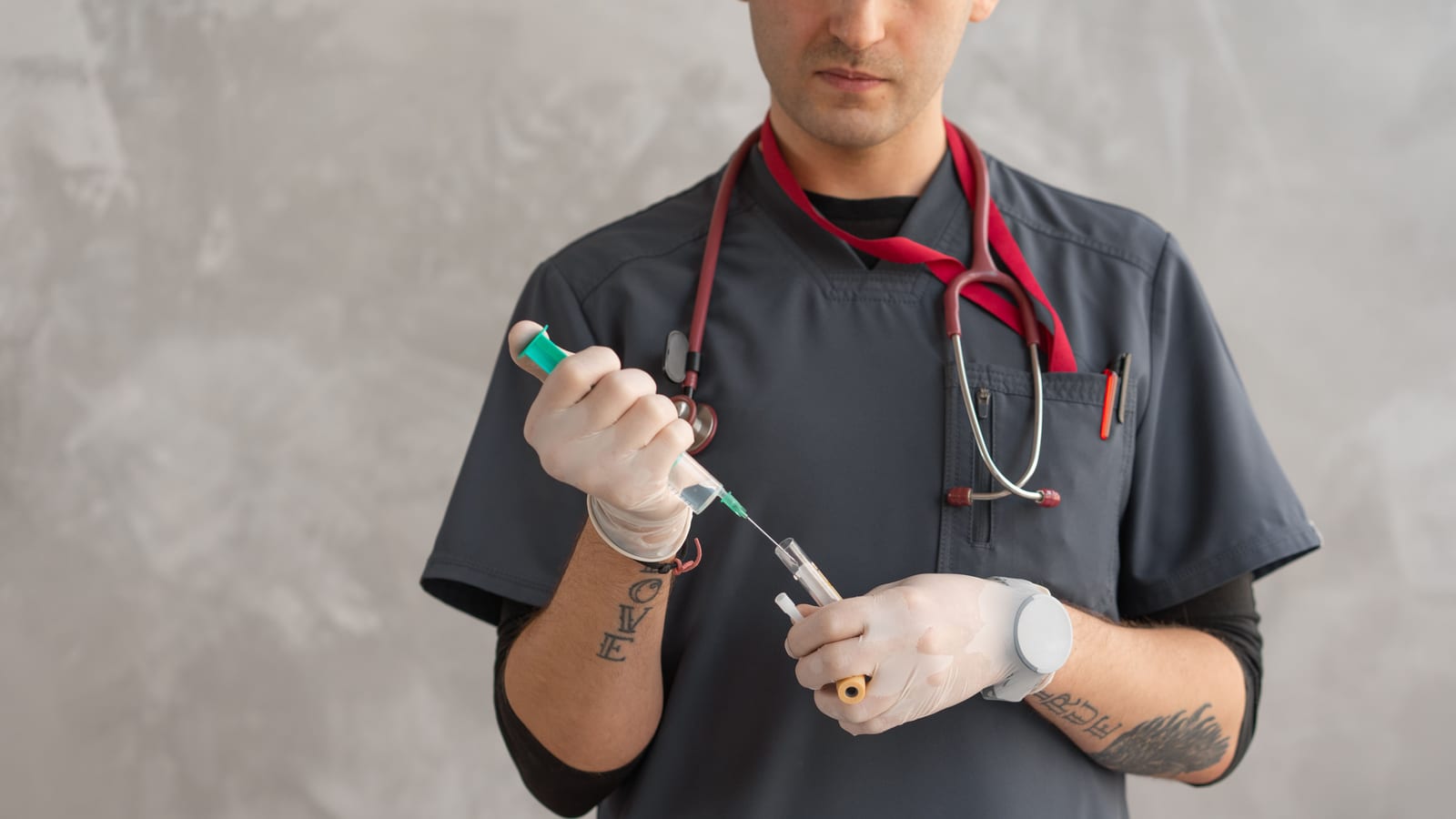
In brief: Botox is FDA-approved as a preventive treatment for chronic migraine, defined as 15 or more headache days per month, at least 8 of which have migraine features, for more than three months. The PREEMPT protocol calls for 155 units divided across 31 fixed injection sites across the head, neck, and shoulders, repeated every 12 weeks. Most insurers cover it with prior authorization once a patient has failed two or more oral preventives. Many patients don’t see meaningful response until after the second treatment cycle.
What is Botox for migraines?
Botox for migraines is a medical, not cosmetic, use of onabotulinumtoxinA, the same active drug used for glabellar lines. The FDA approved it for chronic migraine prevention in 2010 after the PREEMPT-1 and PREEMPT-2 phase 3 trials. The dosing, injection pattern, and clinical goals are completely different from a cosmetic Botox treatment. The aim is to reduce the number of headache days per month, not to smooth wrinkles, although a patient receiving the migraine protocol will also see a forehead-line softening effect as a secondary outcome.
It’s important to understand what Botox is and isn’t approved for. The FDA approval covers chronic migraine, not episodic migraine (fewer than 15 headache days a month), not tension-type headache, and not medication-overuse headache as a primary diagnosis. Off-label use exists, but insurers generally won’t cover those indications. For broader background on the drug, see our neurotoxins guide.
How is chronic migraine defined?
The International Classification of Headache Disorders (ICHD-3) defines chronic migraine as:
- Headache on 15 or more days per month for more than 3 months, AND
- At least 8 of those days have features of migraine without aura, migraine with aura, or respond to a triptan or ergot derivative.
If you’re below those thresholds, say, 8 migraine days a month. You have episodic migraine, and Botox is not FDA-approved for your case. Other preventives (CGRP monoclonal antibodies, topiramate, propranolol, amitriptyline) are first-line in that situation.
How does Botox prevent migraines?
The mechanism isn’t fully settled, but the prevailing model is that Botox blocks the release of pain neurotransmitters, including CGRP, substance P, and glutamate, from peripheral trigeminal nerve endings in the scalp, neck, and shoulders. By dampening that peripheral signaling, it appears to reduce the central sensitization that drives chronic migraine.
What this is not: muscle relaxation. The migraine effect is independent of the visible cosmetic effect on forehead muscles. Patients sometimes assume the drug is “freezing” tension-related muscles, but the PREEMPT injection sites include locations like the occipital region and trapezius where the goal is nerve-ending blockade, not muscle paralysis.
What is the PREEMPT protocol?
The Phase III Research Evaluating Migraine Prophylaxis Therapy (PREEMPT) trials established the injection map and dose that is now standard of care. The protocol:
- Total dose: 155 units of onabotulinumtoxinA per treatment cycle
- Injection sites: 31 fixed sites across 7 head and neck muscle groups
- Muscle groups: Corrugator, procerus, frontalis, temporalis, occipitalis, cervical paraspinal, and trapezius
- Dose per site: 5 units per site
- Treatment interval: Every 12 weeks
- Optional add-on: Up to 40 additional units (8 sites) in a “follow-the-pain” pattern at the clinician’s discretion, for a maximum of 195 units
The 31 sites are specified by anatomic location, not by where the patient feels pain. That standardization is the reason the protocol replicates across providers, when patients move or switch clinics, the next injector should be able to reproduce the same injection map.
What does the research show?
The PREEMPT-1 and PREEMPT-2 trials pooled data from over 1,300 adults with chronic migraine. At 24 weeks (two treatment cycles), patients receiving Botox averaged 8.4 fewer headache days per month, compared to 6.6 fewer in the placebo group, a statistically significant difference. About half of treated patients achieved at least a 50% reduction in headache days (Dodick et al., Headache 2010).
The open-label COMPEL study followed 716 patients for 108 weeks (about 2 years) on the standard PREEMPT regimen. By cycle 9, patients averaged 10.7 fewer headache days per month than at baseline, suggesting that benefit accrues with continued treatment rather than plateauing after the first few cycles (Blumenfeld et al., J Headache Pain 2018).
FDA labeling for Botox in chronic migraine remains current as of 2026 and is supported by both the original pivotal trial data and post-marketing safety data accumulated since 2010 (Botox prescribing information, FDA).
How long until you feel results?
This is the single most important expectation to set. Botox for chronic migraine is not an acute treatment. It does not stop a migraine in progress, and most patients should not expect dramatic results from the first treatment.
- Cycle 1 (weeks 0–12): Some patients notice a modest reduction in headache frequency or severity by week 4 to 6. Many notice nothing.
- Cycle 2 (weeks 12–24): The majority of responders show clear improvement by the second cycle. This is the cycle that determines whether to continue.
- Cycle 3 and beyond: Effect tends to consolidate. Most insurers require documentation of improvement after the second cycle to authorize ongoing treatment.
If you’ve completed two full cycles (about 6 months) with no meaningful change in headache days, your neurologist will typically discontinue Botox and try a different preventive, a CGRP monoclonal antibody (erenumab, fremanezumab, galcanezumab, eptinezumab) or a gepant (atogepant, rimegepant) are common next steps.
Will insurance cover Botox for migraines?
Most commercial insurance plans and Medicare cover Botox for chronic migraine, but virtually all require prior authorization. The standard pre-authorization criteria:
- Documented diagnosis of chronic migraine (ICD-10 G43.7) meeting the ICHD-3 criteria above
- Trial and failure or intolerance of at least two oral preventive medications (commonly topiramate, propranolol, amitriptyline, or a CGRP inhibitor)
- A headache diary spanning at least one month
- Treatment by a qualified provider, typically a neurologist or headache specialist
Out-of-pocket cost without insurance ranges from $1,200 to $2,000 per treatment cycle, including the drug and injection fee. With insurance, the patient typically pays a copay for the neurologist visit and a portion of the drug cost, sometimes nothing if the deductible has been met.
How is it different from cosmetic Botox?
Same drug, very different protocol. The contrasts that matter:
One practical implication: cosmetic Botox does not treat chronic migraine. The dose and injection pattern aren’t sufficient. If you’re getting cosmetic Botox and have noticed your headaches improve, that’s a real but partial effect, it doesn’t replace a properly dosed PREEMPT treatment under a neurologist’s care.
What are the side effects?
The most commonly reported side effects in the PREEMPT trials:
- Neck pain and stiffness (about 9% of treated patients)
- Muscle weakness in injected areas
- Eyelid drooping (ptosis), uncommon and reversible
- Injection-site pain and bruising
- Headache in the 24–48 hours after injection
Less common but more serious: neck weakness severe enough to interfere with holding the head upright, which is why dosing in the cervical paraspinal and trapezius muscles is conservative. Contraindications include myasthenia gravis, Lambert-Eaton syndrome, ALS, and known hypersensitivity to botulinum toxin or any product excipient.
For aftercare guidance, most of which applies to medical Botox as well, see our Botox aftercare reference.
What to ask your neurologist
If you’re considering Botox for chronic migraine, bring these questions to the consultation:
- Do I meet the ICHD-3 chronic migraine criteria, or am I still in the episodic range?
- What oral preventives have I tried, and for how long? Do I have the documentation needed for prior authorization?
- Should we try a CGRP monoclonal antibody first, or proceed directly to Botox?
- Are you using the full PREEMPT protocol (31 sites, 155 units), or a modified version?
- What’s the plan if I don’t respond after two cycles?
- What’s my expected out-of-pocket cost per cycle after insurance?
Patients are sometimes offered “modified” Botox protocols, fewer injection sites, lower total dose, by providers who aren’t trained in the full PREEMPT method. The trial evidence applies to the full protocol. Modified versions may work, but the data supporting them is much weaker.
FAQ
How long does each treatment last?
The PREEMPT cycle is 12 weeks. Beyond that point, peripheral nerve effects begin to wane and headache frequency typically rebounds. The trial protocol and the FDA label both specify retreatment every 12 weeks, not waiting for symptoms to return.
Can Botox stop a migraine that’s already starting?
No. Botox is a preventive. It reduces the frequency of headaches over time. For acute attacks, the standard options are triptans, gepants, ditans, or NSAIDs depending on your headache profile.
Does it interact with CGRP inhibitors?
The combination is increasingly common and appears safe in clinical use, but data are still accumulating. Some insurers require failure of CGRP monotherapy before approving the combination. Your neurologist can lay out what your plan requires.
Will I see a cosmetic effect?
Probably. The forehead and glabellar sites in the PREEMPT protocol will produce a smoothing effect similar to cosmetic Botox, although the dose distribution is different. Most patients consider this a small bonus.
Is Botox a long-term solution?
For responders, yes, the COMPEL data show benefit accruing through at least 2 years of continuous treatment. Some patients eventually wean off when headache frequency stabilizes; others continue indefinitely.
Can I get Botox for migraines at a medspa?
For medical chronic-migraine treatment under insurance, you typically need a neurologist or headache specialist. Medspa providers focus on cosmetic dosing. If you have both cosmetic interest and chronic migraine, work with a neurologist for the medical protocol and a separate aesthetic provider for cosmetic touch-ups if you want them.
Talk to a clinician at OC Weight Loss and Medspa
If your interest in Botox is cosmetic, softening expression lines or planning a maintenance routine, our injection team can build a plan around your timeline and budget. If you’re researching Botox for chronic migraine, the right next step is a neurologist consultation; we’ll happily refer you. Read our Botox service overview for more on cosmetic options.
Book a free consultation
Sources: Dodick DW et al., Headache 2010 (PREEMPT pooled analysis); Blumenfeld AM et al., J Headache Pain 2018 (COMPEL study); Botox (onabotulinumtoxinA) FDA prescribing information; International Classification of Headache Disorders, 3rd edition.
Related treatments at our Mission Viejo clinic
Not sure which treatment fits? These are the related services our clinicians most often discuss at a consultation.
- Botox Injections in Orange County CA – Quick & Convenient, Discover Botox injections to smooth fine lines, reduce wrinkles, and achieve a youthful, refreshed look with safe, non-surgical treatments.
- Dysport in Orange County – Get Results in Days, Searching for the best Dysport near me?
- Daxxify Injections Near Orange County - No Downtime, Looking for Daxxify injections near me?
References
- OnabotulinumtoxinA for treatment of chronic migraine: pooled results from the double-blind, randomized, placebo-controlled phases of the PREEMPT clinical program — Headache 2010, via PubMed
- Botulinum toxins for the prevention of migraine in adults — Cochrane Database Syst Rev 2018, via PubMed
- Effectiveness of onabotulinumtoxinA (BOTOX®) for the preventive treatment of chronic migraine: A meta-analysis on 10 years of real-world data — Cephalalgia 2022, via PubMed
- Practice guideline update summary: Botulinum neurotoxin for the treatment of blepharospasm, cervical dystonia, adult spasticity, and headache [RETIRED]: Report of the Guideline Development Subcommittee of the American Academy of Neurology — Neurology 2016, via PubMed