
Quick summary: Phentermine is a short-term, Schedule IV appetite suppressant that works quickly through the central nervous system; GLP-1 receptor agonists are longer-term medications that work through gut-hormone signaling and have large randomized trial data behind them. Neither is right for everyone, candidacy depends on your health history, cardiovascular status, and goals. At OC Weight Loss & Med Spa in Mission Viejo, CA, every medication conversation starts with a thorough clinical screening. Individual results vary.
When the usual effort stops translating into results, many people start researching medication options. Two names come up most often: phentermine and GLP-1 receptor agonists. They work differently, last for different durations, and suit different health profiles. Below is a clear-eyed comparison to help you have a more informed conversation with your clinician.
What Are Phentermine and GLP-1 Medications?
Phentermine is a Schedule IV controlled substance and centrally acting appetite suppressant. The FDA labels it for short-term use, typically described as “a few weeks”, as an adjunct to diet, exercise, and behavioral support. It is one of the oldest prescription weight-loss medications in the United States.
GLP-1 receptor agonists (such as semaglutide, branded as Wegovy or Ozempic) mimic a natural gut hormone involved in appetite regulation and blood sugar control. They are designed for longer-term use and are FDA-approved for chronic weight management in adults who meet specific BMI and health criteria. Large randomized controlled trials support their use over extended treatment periods.
The core difference: phentermine is typically a short, closely supervised phase; GLP-1 therapy is often framed as ongoing medical management of obesity as a chronic condition.
Phentermine vs GLP-1 at a glance
| Factor | Phentermine | GLP-1 receptor agonists |
|---|---|---|
| What it is | Short-term, Schedule IV appetite suppressant acting on the central nervous system | Longer-term medication working through gut-hormone signaling |
| Treatment length | Typically a short, closely supervised phase | Often framed as ongoing medical management of obesity as a chronic condition |
| Pace of results | Often shows earlier results given its faster onset | Tends to accumulate more weight loss over longer treatment durations |
| Common side effects | Dry mouth, insomnia, increased heart rate, elevated blood pressure, jittery feeling | GI effects early on: nausea, diarrhea, vomiting, constipation, abdominal pain |
| Generally not appropriate for | Cardiovascular disease, uncontrolled hypertension, hyperthyroidism, glaucoma, pregnancy | Personal or family history of MTC or MEN 2, pregnancy, severe GI disease |
| May fit if your goal is | Fast start to break a plateau — if screening clears contraindications | A longer-term, sustained approach backed by large-scale trial evidence |
How Do They Work?
How Phentermine Works
Phentermine reduces appetite by stimulating norepinephrine release in the hypothalamus, dampening hunger signals. Many patients notice an effect within the first few days: fewer spontaneous snacks, less drive to eat out of habit, and smaller portions without feeling deprived. Because it is a stimulant-class medication, the effects on heart rate and the central nervous system show up relatively quickly.
How GLP-1 Medications Work
GLP-1 receptor agonists work through gut-hormone signaling: they slow gastric emptying, strengthen fullness cues, and reduce cravings. Dosing is escalated gradually, usually over several weeks, to improve tolerability. Because of that ramp-up, early appetite changes can feel more subtle than with phentermine. In the STEP 1 trial, participants using semaglutide 2.4 mg plus lifestyle intervention lost an average of 14.9% of body weight at 68 weeks.
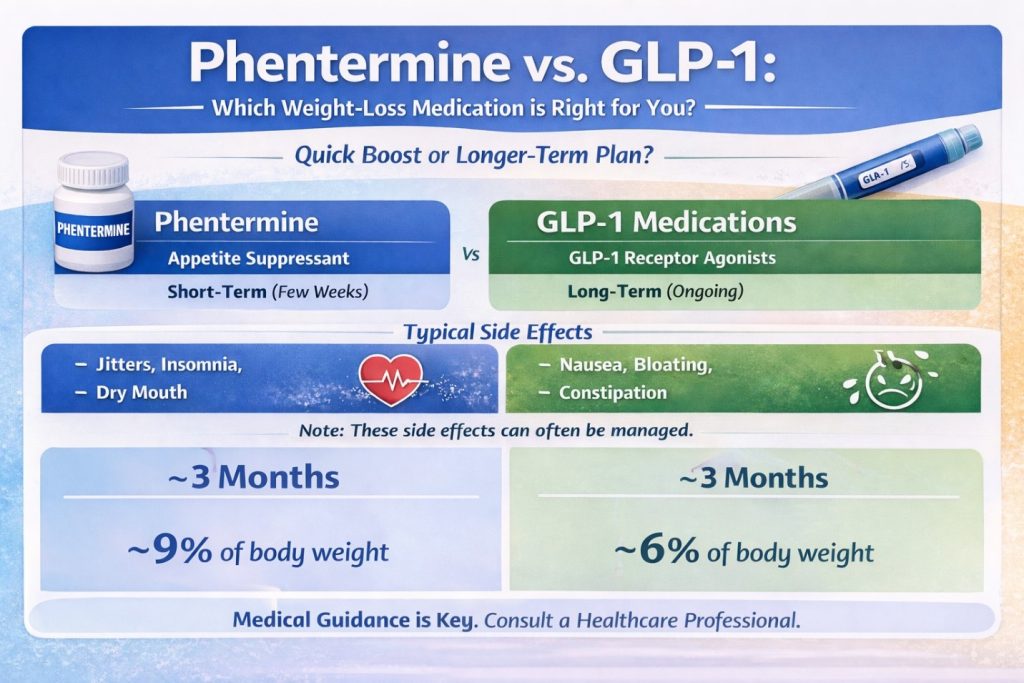
Typical Weight Loss: What Clinical Data Shows
Weight loss with either medication does not follow a straight line. Phentermine often shows earlier results given its faster onset; GLP-1 medications tend to accumulate more weight loss over longer treatment durations. The table below reflects approximate ranges from clinical literature, individual results vary considerably.
*Results depend on starting weight, dose, adherence, lifestyle habits, and individual response. These ranges are not guarantees.
Safety, Side Effects, and Who Should Not Use These Medications
Phentermine: Key Safety Considerations
Phentermine is a Schedule IV controlled substance, which means it carries regulatory restrictions and requires careful medical supervision. Common side effects include dry mouth, insomnia, increased heart rate, elevated blood pressure, and a jittery or “wired” feeling. Sleep disruption is worth noting specifically: poor sleep can worsen appetite regulation and undermine the medication’s benefit.
Phentermine is generally not appropriate for patients with:
- Cardiovascular disease, history of heart attack, or uncontrolled hypertension
- Hyperthyroidism or glaucoma
- History of drug abuse or current use of monoamine oxidase inhibitors (MAOIs)
- Pregnancy or breastfeeding
- Significant anxiety or agitation
Because phentermine acts on the cardiovascular and central nervous systems, pre-treatment screening of blood pressure, heart rate, and relevant medical history is required before prescribing.
GLP-1 Medications: Key Safety Considerations
GI side effects are the most common concern early in GLP-1 treatment. FDA labeling for Wegovy lists nausea, diarrhea, vomiting, constipation, and abdominal pain as frequent reactions, particularly during dose escalation. These often improve as the body adjusts, but they can be significant enough to require slowing the titration schedule.
Important safety information from FDA labeling: GLP-1 receptor agonists carry a boxed warning regarding thyroid C-cell tumors observed in rodent studies. Semaglutide is contraindicated in patients with a personal or family history of medullary thyroid carcinoma (MTC) or Multiple Endocrine Neoplasia syndrome type 2 (MEN 2). While the relevance to humans is not established, this contraindication is taken seriously in clinical practice.
GLP-1 medications are generally not appropriate for patients with:
- Personal or family history of MTC or MEN 2
- Pregnancy (weight-loss medication use is not advised during pregnancy)
- Severe gastrointestinal disease (e.g., gastroparesis)
- Pancreatitis history (use with caution; discuss with provider)
Candidacy for either medication is determined at consultation by a medical provider, not by self-assessment.
Choosing Between Them: Three Factors That Matter
1. Your Goal and Timeline
- Fast start to break a plateau, a short, monitored phentermine phase may fit, provided screening clears the cardiovascular and CNS contraindications.
- Longer-term, sustained approach, GLP-1 therapy is supported by large-scale trial evidence for meaningful weight loss over extended treatment periods.
2. Your Medical Profile
Blood pressure, heart rhythm, anxiety history, GI health, thyroid history, and current medications all shape which option (if either) is appropriate. A provider review is not optional. It is the starting point.
3. Practicality
Injections versus tablets, dosing frequency, cost, and how closely you can follow up all affect whether a treatment plan holds together in real life. The most effective medication is the one you can safely stay on. If insurance coverage is part of your decision, this resource may be relevant: Medi-Cal’s GLP-1 cutoff and a 3-step action plan.
What If the Scale Isn’t Moving After 2–3 Weeks?
Two to three weeks is early, especially during GLP-1 dose titration. Common reasons the scale stalls include: still being on a sub-therapeutic GLP-1 dose; sleep disruption driving hunger; untracked liquid calories; or constipation masking fat loss. What helps: three-day food tracking, protein- and fiber-anchored meals, daily movement, and reviewing the plan with your clinician rather than changing doses independently.
Maintaining Weight Loss After Stopping Medication
For many patients, appetite returns when medication stops. Building habits during the treatment period makes maintenance more realistic. Practical anchors include: consistent protein at every meal, fiber-rich foods to sustain fullness, regular meal timing, limiting liquid calories, prioritizing sleep, daily movement with 2–3 resistance sessions weekly, and a planned step-down check-in with your clinician.
Frequently Asked Questions
Which medication reduces appetite faster?
Phentermine typically produces a noticeable appetite change within the first few days. GLP-1 medications build more gradually as the dose escalates, so early weeks can feel subtle by comparison.
Can phentermine and a GLP-1 be used together?
Combination use requires careful provider judgment and monitoring. It is not a standard first-line approach and is not appropriate for everyone. Discuss your full medication list and medical history at consultation.
Will weight return when I stop?
It can. Research on GLP-1 medications in particular shows that much of the weight loss is sustained by the medication itself, meaning a maintenance plan (food structure, activity, follow-up) is as important as the active treatment phase.
Are these medications safe for people with high blood pressure?
Phentermine can raise blood pressure and is generally contraindicated in patients with uncontrolled hypertension. GLP-1 medications have a more neutral or potentially favorable cardiovascular profile in some studies. The answer in any individual case depends on a provider review of current readings, medications, and overall cardiovascular history.
What if side effects make it hard to continue?
Do not adjust doses independently. Contact your clinician to discuss timing changes, slower titration, hydration adjustments, meal modifications, or a change in treatment approach. There are usually workable options before discontinuing entirely.
Talk With Our Clinical Team
At OC Weight Loss & Med Spa in Mission Viejo, CA, every weight-loss medication conversation begins with a thorough clinical assessment, not a prescription pad. We screen for cardiovascular risk, review your full medication list, set honest expectations for each option, and build a follow-up plan that includes side-effect support and a maintenance strategy. If you are considering either phentermine or a GLP-1 medication, a free consultation is the right first step.
Book a free consultation
This article is for educational purposes only and does not constitute medical advice. Weight-loss medications are not appropriate for everyone. Consult a qualified healthcare professional for guidance based on your individual health history, current medications, and goals.
Related treatments at our Mission Viejo clinic
Not sure which treatment fits? These are the related services our clinicians most often discuss at a consultation.
- GLP-1 Weight Loss Orange County, Explore GLP1 for Weight Loss in Orange County.
- Semaglutide Injections in Orange County, CA, Medically supervised Semaglutide weight loss injections in Mission Viejo, serving Orange County.
- Medical Weight Loss Orange County, Clinician-supervised medical weight loss in Mission Viejo, CA.
References
- Once-Weekly Semaglutide in Adults with Overweight or Obesity — N Engl J Med 2021, via PubMed
- AGA Clinical Practice Guideline on Pharmacological Interventions for Adults With Obesity — Gastroenterology 2022, via PubMed