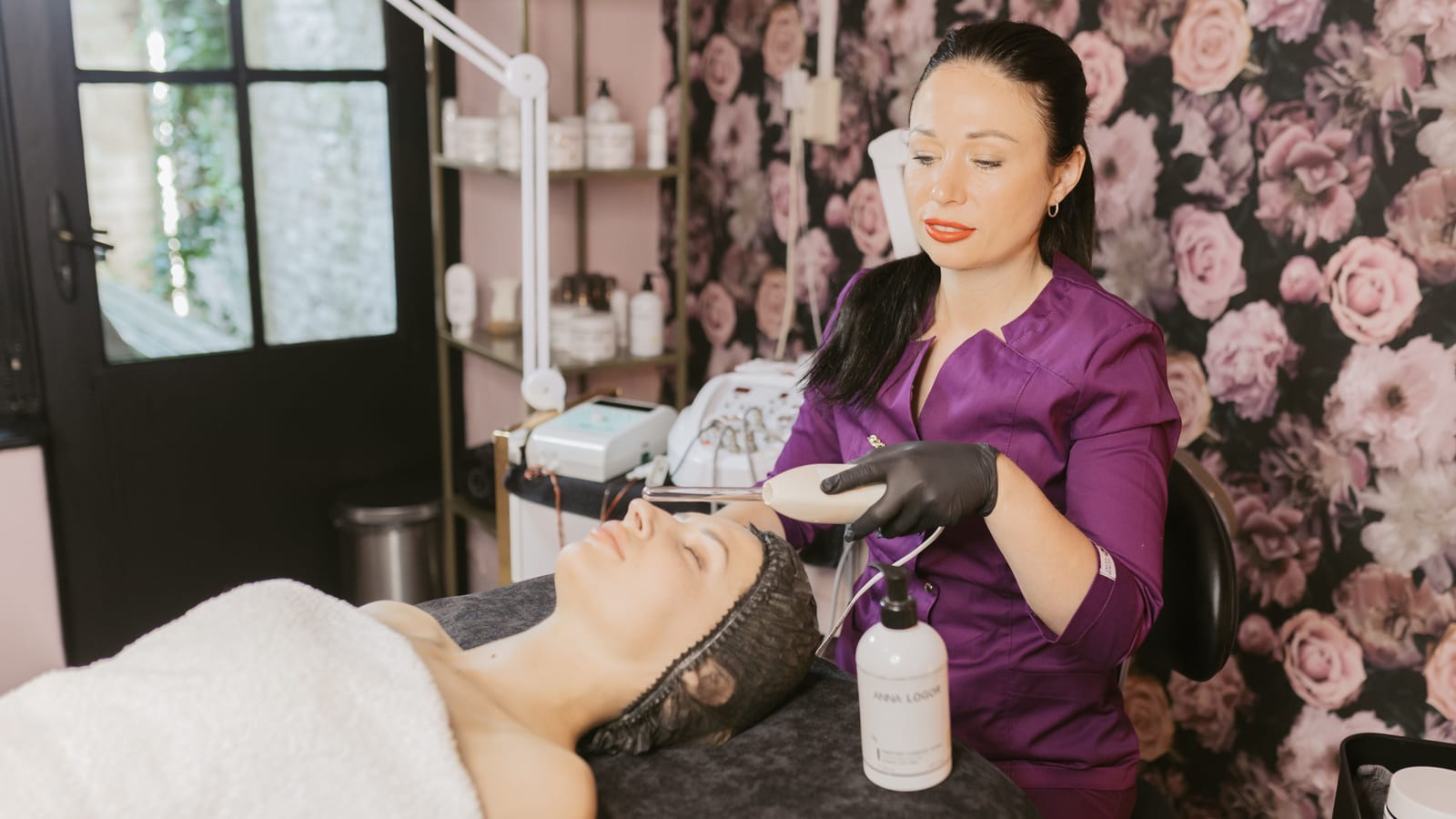
What you need to know: Laser hair removal in Lake Forest means a five-minute drive south on El Toro Road to our Mission Viejo clinic. We book Monday through Friday, and the first and last appointments of the day are the ones working parents and professionals fit in most easily. For full body areas, plan to start a course in November or December if you want to be hair-free by summer, the series spans 6 to 10 sessions over 6 to 12 months, depending on your Fitzpatrick type and the area treated.
Lake Forest leans family-heavy, which means the calendar constraints we hear at consultation are usually about kids’ schedules, work meetings, and the seasonal rhythm of beach trips and high-school sports. This page answers laser hair removal questions for that demographic specifically, when to start, how to fit the series around school and summer, what gets paid out-of-pocket vs HSA, and what device matters for your skin type. The deeper science lives in our laser treatments guide.
Drive from Lake Forest
Parking is in front of the suite at 24002 Via Fabricante. No structure, no validation. Walk-in to chair is usually under five minutes once you arrive.
Why working parents do laser hair removal at our clinic
- Early-morning slot. We open at 9 am, which suits the weekday-busy crowd. Underarms or bikini fits in 30 minutes; full legs in 60 minutes. Drop the kids at school, run the session, and still make the morning meeting.
- School-year scheduling. November through February is the right window to start full body areas, sun exposure is lowest, swim season is over, and you finish a 6-session course before the summer heat.
- HSA/FSA for medically indicated cases. For pseudofolliculitis barbae, hidradenitis suppurativa, persistent severe ingrowns, or PCOS-related hirsutism, treatment can sometimes be coded as medically necessary. We provide the documentation; insurance coverage depends on your specific plan.
- Predictable per-area pricing. No “flash count” upcharging mid-series. Written package quote at consult.
Device choice for the Lake Forest demographic
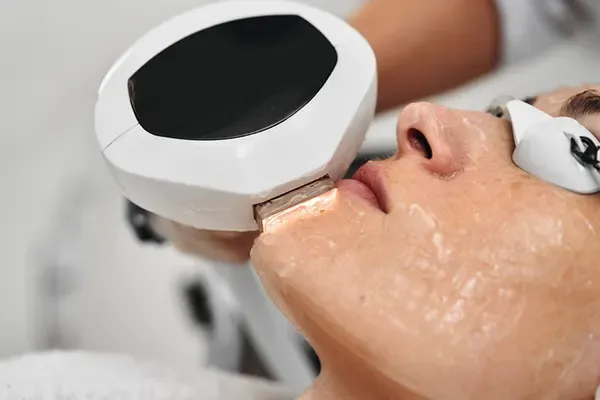
Lake Forest skin types skew across the full Fitzpatrick spectrum. We carry both alexandrite (755 nm) for Fitzpatrick I-III and Nd:YAG (1064 nm) for IV-VI. The device used should match the skin, not the other way around. A few practical points:
- For fair Fitzpatrick I-II patients with dark hair, alexandrite is fast and efficient. Often 6 sessions for ~80% reduction on underarms.
- For light-olive Fitzpatrick III patients, either device works; we choose based on hair coarseness and area.
- For Fitzpatrick IV and darker, Nd:YAG only, with a test patch at the first visit. The full safety rationale is in our laser hair removal on dark skin piece.
- For very light hair (blonde, red, white) of any Fitzpatrick type, laser has limited effect, electrolysis is the better tool. We will say so at consult rather than sell a series that will not deliver.
Related treatments at our Mission Viejo clinic
Not sure which treatment fits? These are the related services our clinicians most often discuss at a consultation.
- Laser Hair Removal Mission Viejo, Get laser hair removal for smooth, hair-free skin.
- Laser Treatments for Clear Smooth and Radiant Skin, Explore laser treatments to reduce wrinkles, acne scars, and pigmentation for smoother, clearer, and more radiant skin safely today.
- Skin Care Tips for Clear Healthy and Glowing Skin, Discover skin care tips to achieve clear, healthy, glowing skin.
How many sessions does it take, and why
Hair does not all grow at once. Each follicle cycles through a growing phase, a transition phase and a resting phase, and laser energy only reaches the follicles that are actively growing, the ones still holding pigment in the root. That is the whole reason a single session cannot finish the job: on any given day, only a share of the hair in a treatment area is in the phase the laser can act on.
Spacing sessions is therefore not padding the schedule. Treatments are timed so that the follicles resting during your last visit have moved into the growing phase by your next one. Areas differ: coarse hair on the face and neck cycles faster than hair on the legs or back, so the interval and the number of sessions are set per area rather than per person.
What that means practically is that progress looks uneven early on. Hair sheds over the days after a session and the area stays clear for a stretch, then some regrowth appears, finer and more sparse than before, but visible. That is the expected pattern, not a treatment that has stopped working. Results are assessed across a course rather than after any one visit, and maintenance sessions are a normal part of the plan rather than a sign something failed.
References
- Lasers for reduction of unwanted hair in skin of color: a systematic review and meta-analysis — J Eur Acad Dermatol Venereol 2020, via PubMed
- Meta-analysis of hair removal laser trials — Lasers Med Sci 2009, via PubMed
- Paradoxical Hypertrichosis Associated with Laser and Light Therapy for Hair Removal: A Systematic Review and Meta-analysis — Am J Clin Dermatol 2021, via PubMed