InBody 580 body composition scanning
A medical-grade scan that measures muscle mass, body fat and water balance in under a minute, the detail a bathroom scale cannot give you. Included with your free consultation in Mission Viejo.
Medically reviewed by Lindsay Short, NP-BC, Board-Certified Nurse Practitioner · last reviewed August 2026
Why the scale is the wrong instrument
Weight is a single number that combines muscle, fat, bone and water, and it cannot tell you which of them changed. That matters more than it sounds. Two people can lose the same ten pounds, one loses mostly fat and keeps their muscle, the other loses a significant amount of muscle along with it. The scale reports both as success. Only one of them is.
This is particularly relevant on GLP-1 therapy, where rapid appetite reduction can mean protein intake falls without anyone noticing. Muscle loss during weight loss is one of the things a supervised plan exists to prevent, and you cannot prevent what you are not measuring.
What the InBody 580 measures
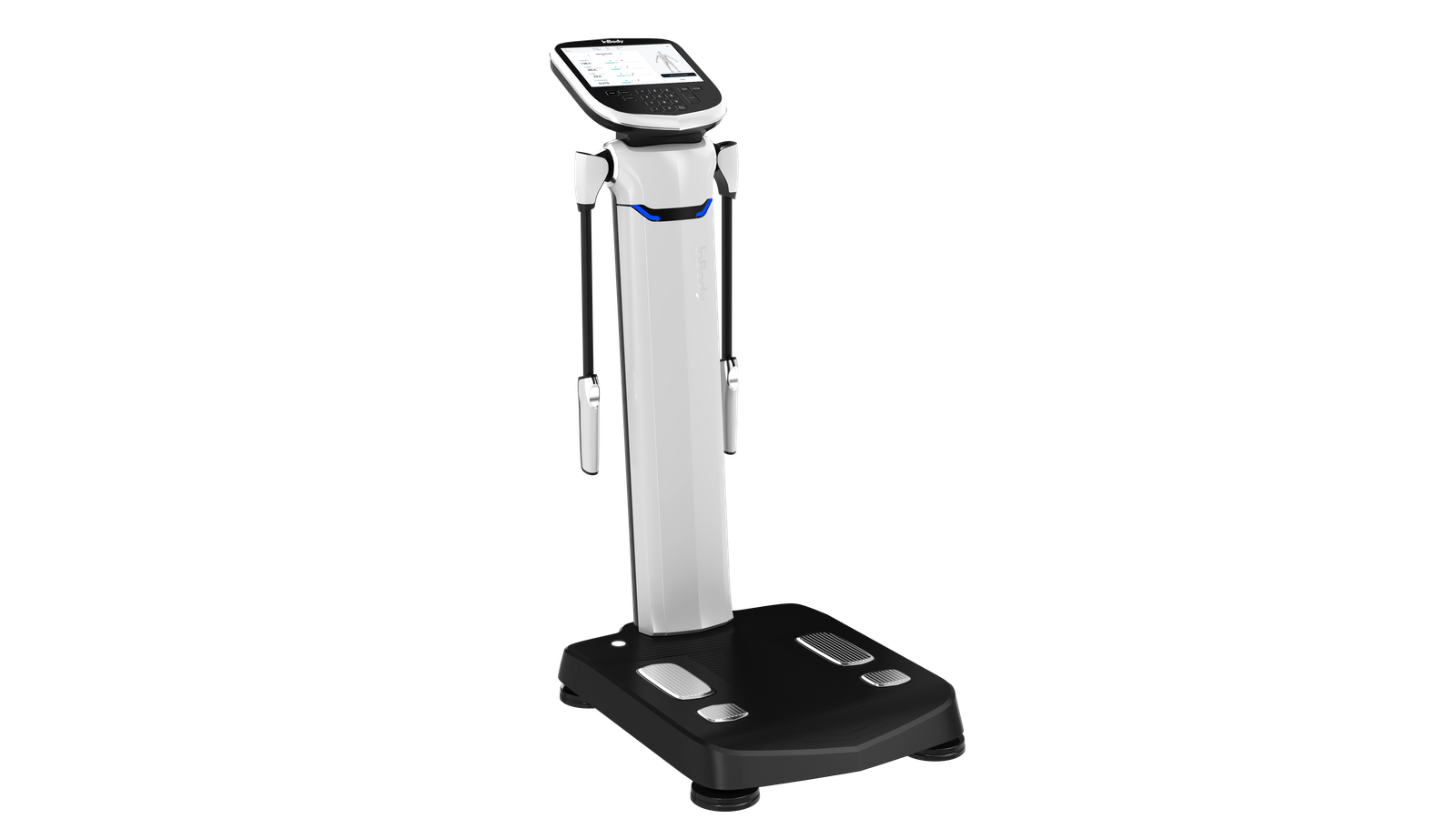
The device sends a low-level current through the body and measures the resistance different tissues offer. Muscle holds more water and conducts readily; fat resists. From that it separates:
- Skeletal muscle mass, the muscle you can actually train and lose, reported for each arm, each leg and the trunk separately.
- Body fat mass and percentage, the number most people expect, but as one figure among several rather than the whole picture.
- Visceral fat, the fat around the organs rather than under the skin. The measure most closely tied to metabolic health, and often the first to improve.
- Total body water, intracellular and extracellular, the balance between them is a useful signal, and it explains most of the day-to-day noise a scale picks up.
- Basal metabolic rate, an estimate of what your body uses at rest, which shifts as muscle mass changes.
What a scan is like
You stand on the device in bare feet and hold a handle in each hand. It takes under a minute, nothing is injected or attached, and you can wear ordinary clothes. You leave with a printed report, and a licensed medical professional goes through it with you rather than handing it over.
Getting a comparable reading
Hydration, a recent meal and recent hard exercise all move the numbers. None of that makes the device inaccurate. It makes a single reading a snapshot of that moment. Scanning under similar conditions each time is what turns a series of snapshots into a trend you can trust.
A body composition scan is a measurement, not a treatment or a diagnosis. It informs a plan built by a licensed medical professional alongside your history, your bloodwork and your goals. It does not replace any of them.
Who we scan
Every new patient, at the first visit, so there is a baseline to measure against. Members receive a scan as part of their membership across all tiers. And anyone on an active weight management, hormone or peptide plan is rescanned every four to six weeks, because the trend is the point.
It is also useful on its own. If you are training hard and the scale has not moved, a scan frequently shows exactly why, and that is worth knowing before you change anything.
Answers before you book
What is an InBody scan?
A medical-grade body composition analysis. You stand on the device holding two handles for under a minute, and it reports muscle mass, body fat, and water balance segment by segment rather than a single overall number.
Are InBody scans accurate?
They are consistent and reliable for tracking change over time, which is what matters clinically. Hydration, recent meals and recent exercise can shift a single reading, so we scan under similar conditions each time to keep the comparison fair.
How is it different from a bathroom scale or BMI?
A scale gives one number and cannot tell you what changed. BMI does not distinguish muscle from fat at all. An InBody scan separates them, which is why someone can look and feel different while the scale barely moves.
Do I get a scan at my first visit?
Body composition scanning is part of how we set a baseline for new patients. Mention it when you book so we can allow time for it.
How should I prepare for a scan?
Come reasonably hydrated, avoid a large meal or hard exercise in the hours beforehand, and use the bathroom first. Repeating those conditions each time is what makes the readings comparable.
What does it tell you about visceral fat?
The report includes a visceral fat measure, which is the fat around the organs rather than under the skin. It is the reading clinicians care about most, and it often improves before overall weight does.
How often should I be scanned?
Usually every four to six weeks on an active plan. Scanning more often mostly measures hydration rather than real change.
Start with a measurement, not a guess
Your first consultation is free and includes an InBody 580 scan. No insurance, no referral, and no obligation to go ahead.